The Death of the Gimbal: Why the Antigravity A1 is Redefining Aerial Cinematography
For the modern traveler, the drone has become as essential as a passport. Whether navigating the rugged peaks of the Andes or capturing the neon pulse of Tokyo’s streets, aerial photography provides a perspective that was, until recently, reserved for multi-million dollar film productions. However, the world of drone piloting has long been plagued by a fundamental tension: the mechanical limitation of the gimbal.
Enter the Antigravity A1, a device released in late 2025 that is currently disrupting the status quo. By abandoning the traditional single-axis, forward-facing camera setup in favor of a dual-lens 360-degree capture system, the A1 has effectively rendered the gimbal obsolete for a significant segment of the creative market. This is no longer just about flying; it is about directing a virtual camera in a pre-recorded digital environment.
Main Facts: The End of "Framing" Anxiety
The core innovation of the Antigravity A1 lies in its philosophy of "fly now, frame later." Traditional drones require the pilot to simultaneously manage flight paths, altitude, and camera pitch. If the pilot misses the shot, the moment is lost.
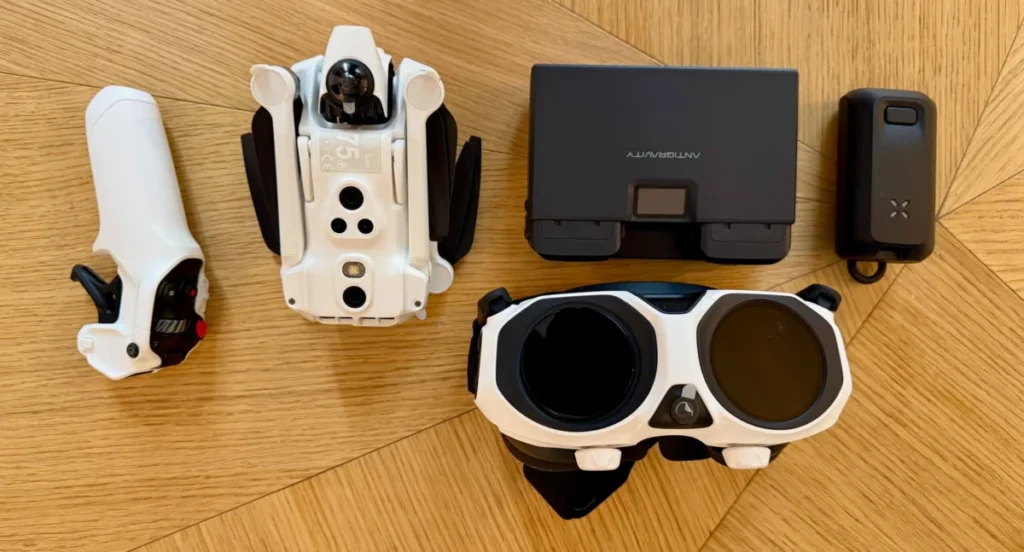
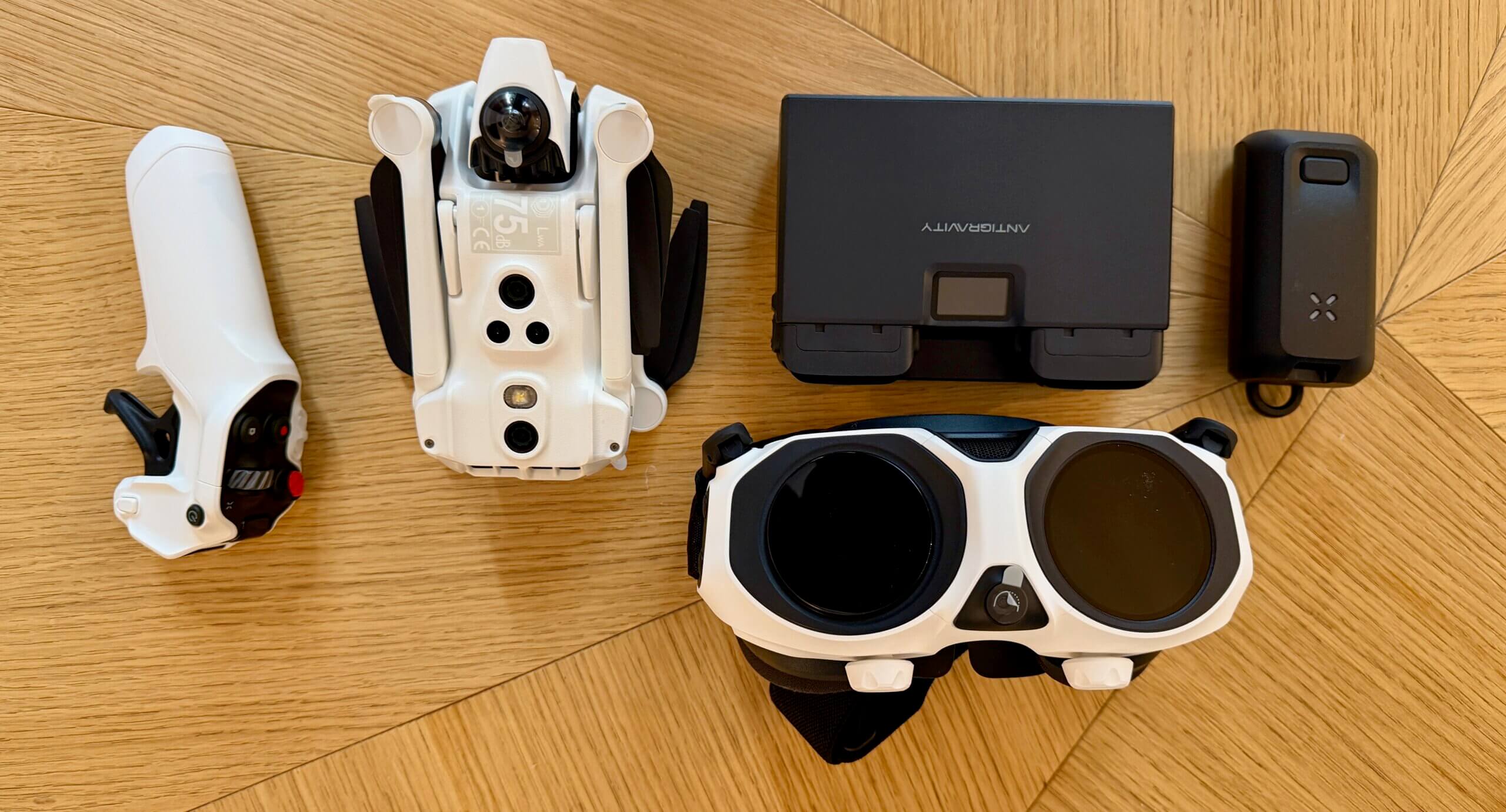
The A1 eliminates this risk by utilizing two ultra-wide-angle lenses positioned on the top and bottom of the central fuselage. Each lens captures a 200-degree field of view, which, when stitched together in-camera, creates a seamless 360-degree sphere. In the final exported footage, the drone’s chassis is digitally masked, creating the uncanny illusion of a camera floating untethered in mid-air.
Technical Specifications at a Glance:
- Weight: 249 grams (inclusive of standard battery).
- Sensor: Dual 1/1.28-inch CMOS units.
- Flight Time: 19–20 minutes (standard); up to 39 minutes (Pro battery).
- Top Speed: 36 mph.
- Build Material: Carbon-fiber-reinforced polymer.
Chronology of Development
The development of the A1 was a response to the "gimbal fatigue" felt by content creators. During 2024, the drone industry reached a plateau where improvements were largely incremental—slightly better batteries or marginally sharper sensors.
Antigravity began its R&D phase with a focus on weight distribution and computational stitching. By late 2025, they successfully minimized the hardware footprint to hit the critical 249-gram regulatory threshold. This weight is significant; in most international jurisdictions, drones weighing 250 grams or more require mandatory registration and are subject to stringent flight restrictions. By engineering the A1 to weigh exactly 249 grams, Antigravity effectively bypassed the "commercial drone" red tape, making it the ultimate tool for the globetrotting nomad.
The Flight Experience: Sensory Immersion
The flight experience of the A1 is a departure from traditional RC (Remote Control) dynamics. The integration of Vision Goggles—featuring dual 4K micro-OLED displays with a 120Hz refresh rate—provides a near-zero latency experience.
Because the drone captures the entire environment, the goggles support head-tracking. When the pilot turns their head, the viewpoint pans accordingly. This provides a spatial awareness that is simply impossible with a fixed-camera drone. Whether you are navigating a dense forest or following a moving vehicle, the pilot is no longer viewing a "screen"; they are essentially present in the cockpit of the aircraft.
For those who prefer a more tactile connection, the drone features a single-handed motion controller. Pointing the controller becomes the flight vector, while a trigger pull manages velocity. While veteran FPV (First-Person View) pilots can opt for a traditional Mode 2 stick controller, the sheer fluidity of the motion-based system suggests a shift in how consumer drones will be piloted for years to come.
Supporting Data: Camera Performance and Stabilization
The marketing materials for the A1 boast "8K Resolution." It is important for potential buyers to distinguish this from standard cinema 8K. In a 360-degree context, those pixels are stretched across a sphere. When the creator "reframes" that footage into a standard 16:9 flat video, they are essentially cropping a portion of the total sphere.
Despite the crop, the A1 delivers superior color science. Its 10-bit "Log" profile allows professional colorists to push the footage in post-production, while the "Vivid" profile satisfies the needs of social media creators who require an "out-of-the-box" polished look.
Perhaps most impressive is the FlowState stabilization. Even when flying in 20mph winds—a condition that would cause most lightweight drones to shudder—the footage remains unnervingly steady. The combination of the drone’s carbon-fiber-reinforced polymer frame and advanced algorithmic stabilization creates a platform that feels as stable as a tripod-mounted cinema camera.
Official Responses and Industry Implications
Industry analysts have noted that the A1 represents a "democratization of cinematography." By removing the need for a gimbal, Antigravity has reduced the technical barrier to entry. However, this has prompted a debate regarding the "soullessness" of AI-assisted framing.
In a recent press statement, an Antigravity spokesperson noted:
"Our goal was never to replace the pilot’s vision, but to remove the technical friction that prevents that vision from being realized. When you aren’t worried about the drone clipping a tree or the camera vibrating, you are free to focus on the story."
This sentiment is echoed by the inclusion of the "Auto-Frame" AI tool within the Antigravity Studio app. The software identifies subjects, tracks their movement, and generates dynamic cuts automatically. For a solo traveler, this is the equivalent of having a dedicated cameraman trailing them, ensuring that even if they are the only person in the frame, the shot remains perfectly composed.
The Economics of Travel Cinematography
The A1 does not exist in a vacuum. It is a piece of gear that addresses the logistical headaches of modern travel. With the inclusion of "Turtle Mode"—which allows the drone to flip itself upright after a crash—the risk of "the walk of shame" (hiking into dangerous or inaccessible terrain to retrieve a flipped drone) is significantly mitigated.
Furthermore, the "work per minute" efficiency is a game-changer. A traditional drone pilot might spend an hour flying multiple batteries to get the "perfect" angle of a landmark. With the A1, the pilot captures the entire environment in a single pass. The re-framing happens later on a smartphone, meaning one 20-minute flight yields the same usable footage as three or four flights with a conventional drone.
Conclusion: Is the A1 Right for You?
The Antigravity A1 is a transformative product, though it is not without its trade-offs. The lenses, while robust, are inherently more exposed than those on a gimbal-stabilized drone, and the battery life remains a constraint for those who demand long-duration flight. However, these are minor inconveniences in the face of the creative freedom the device offers.
For the traveler who is weary of the repetitive, static "drone shots" that have saturated social media feeds, the A1 offers a way out. It bridges the gap between traditional cinematography and the immersive, boundless nature of VR. Whether you are a professional filmmaker looking for a crash-cam or a casual traveler wanting to capture the scale of the world without the stress of manual framing, the A1 is an essential addition to the modern toolkit.
As we move further into 2026, the A1 stands as a benchmark for what is possible when hardware constraints are treated as problems to be solved by software. The gimbal may not be dead, but its days as the gatekeeper of high-quality aerial footage are certainly numbered.