The Future of Backyard Birding: Are Smart Feeders Worth the Hype?
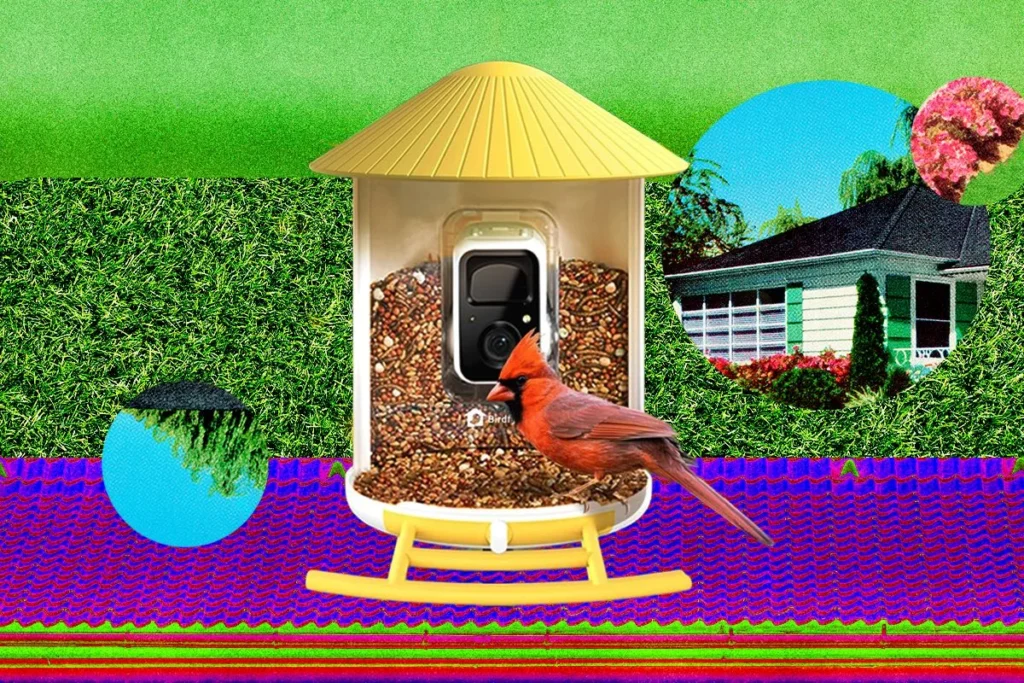
You have almost certainly seen them in your social media feeds: crystal-clear, high-definition videos of a goldfinch mid-flight or a woodpecker’s rhythmic tapping, all captured by a backyard device. Smart bird feeders have transformed from a niche hobbyist tool into a mainstream gadget, promising a digital window into the avian world. But beneath the glossy marketing photos and the promise of AI-powered identification lies a more complex reality.
After more than two years of rigorous testing—enduring the blistering heat of summer, the freezing snow of winter, and the relentless curiosity of neighborhood squirrels—I have put the market’s most popular models to the test. From the industry-leading Netvue Birdfy to the aesthetic, yet occasionally temperamental, options from Birdbuddy and Kiwibit, here is the truth about the current state of smart birding technology.
The Evolution of the Smart Feeder: A Two-Year Chronology
When the first generation of smart bird feeders hit the market around 2022, they were largely experimental. Early reviews, including my own, were lukewarm; the hardware was often fragile, and the artificial intelligence was frequently "wonky," misidentifying common local birds as exotic species from across the continent.
By 2024, the industry underwent a major shift. Companies began integrating solar panels directly into roofs, improving battery life, and refining the AI algorithms using massive datasets from organizations like the Cornell Lab of Ornithology.
As of September 2026, the market has reached a point of maturity. We have moved past the "gimmick" phase and into a period of refinement. New models like the Birdbuddy Home, the robust Birdfy Bamboo, and specialized hardware like the Harymor Smart Bird Bath have introduced modularity and specialized sensors. However, this progress has brought new challenges: an aggressive shift toward subscription-based revenue models and, in some cases, hardware that favors aesthetics over structural durability.
Understanding the "Smart" Ecosystem: Supporting Data
To evaluate these devices, I tested dozens of models for a minimum of four weeks each. My testing criteria focused on four pillars: Image Quality, App Utility, Battery/Solar Reliability, and Durability.
The "Best Overall" Verdict: Netvue Birdfy Lite
The Netvue Birdfy Lite remains the gold standard for most backyard enthusiasts. Having tested the original unit back in 2022, the transition to its current form has been remarkable. Its app is now the second-most user-friendly on the market, trailing only Birdbuddy. With a wide 155-degree field of view, it captures the entire bird rather than just a focused headshot. While the 1080p camera isn’t the sharpest on paper, its reliability—surviving two years of outdoor exposure—makes it the most logical investment for the average consumer.
The Visual Powerhouse: Camojojo Hibird Pro
For those who prioritize image resolution, the Hibird Pro is a standout. It offers 4K Ultra HD video, providing stunning clarity that makes the footage feel like a professional wildlife documentary. It is one of the few feeders that supports both 2.4-GHz and 5-GHz Wi-Fi bands, which helps maintain connection stability in crowded home networks. However, this performance comes with a weight penalty; at 5 pounds fully loaded, it requires a sturdy pole-mount installation.
Design Excellence: Kiwibit Bird Feeder 2
If you value design and maintenance ease, the Kiwibit Bird Feeder 2 is the most thoughtful entry. Its dual-hopper system is removable, meaning you don’t have to disassemble the camera housing to refill the seeds. Its built-in solar roof proved incredibly efficient during my six-week test, maintaining a charge even through consecutive cloudy days in the Pacific Northwest. While it carries a premium price tag and is rarely discounted, the build quality justifies the cost for serious birders.
Subscription Paywalls and Digital "Gotchas"
Perhaps the most significant implication for consumers is the industry-wide pivot to subscription models. In the early days, AI bird identification was often a "buy once, own forever" feature. Today, it is increasingly hidden behind monthly or annual paywalls.

For instance, while the hardware of a $100–$200 feeder might look attractive, the "full experience"—which includes searching past videos by bird species or accessing extended cloud storage—is frequently locked. In my testing, I found that companies like FeatherSnap and Detiko are particularly aggressive in this regard, sometimes failing to mention these recurring costs on their packaging.
Consumers must understand that a "smart" feeder is effectively a security camera for birds. Much like modern home security systems, the hardware is often sold at a low margin to secure a recurring subscription revenue stream. If you aren’t prepared to pay $4 to $7 a month for "premium" features, you may find your experience limited to basic, low-resolution live feeds.
The "Squirrel Problem" and Structural Realities
Marketing copy often claims devices are "squirrel-proof," but my field testing suggests this is rarely the case. Squirrels are persistent, intelligent, and physically capable of causing significant damage to plastic and wood housings.
The most effective way to protect a smart feeder is not through proprietary "squirrel-proof" locks, but through proper siting. I adhere to the 5-7-9 rule:
- 5 feet: The minimum height off the ground.
- 7 feet: The minimum distance from structures like fences.
- 9 feet: The minimum distance from jump points like tree branches.
If you ignore these spacing requirements, even the sturdiest metal-bodied feeder will eventually fall victim to a determined rodent. Furthermore, I have found that capsaicin-treated seeds offer only a temporary reprieve; squirrels eventually habituate to the heat, rendering the deterrent ineffective after a few days.
Technical Considerations: The Wi-Fi Debate
A common question from readers involves Wi-Fi connectivity. Many smart feeders only operate on the 2.4-GHz band, which often confuses users with modern, high-speed mesh routers that prioritize 5-GHz or 6-GHz bands.
The preference for 2.4 GHz in bird feeders is actually a design feature, not a limitation. These frequencies have longer wavelengths, allowing them to penetrate through exterior walls, foliage, and trees much more effectively than 5-GHz signals. Furthermore, 2.4 GHz consumes significantly less power, which is vital for battery-operated devices that rely on small, roof-mounted solar panels. If your router is configured to broadcast exclusively on 5 GHz, you will likely struggle to pair these devices. For those users, I recommend seeking out "dual-band" models, though they remain a premium feature in the current market.
Final Recommendations
Choosing the right feeder depends on your intent:
- For the Casual Observer: The Netvue Birdfy Lite offers the best balance of reliability and price.
- For the Photography Enthusiast: The Camojojo Hibird Pro provides the sharpest 4K footage and superior connectivity.
- For the Maintenance-Averse: The Kiwibit Bird Feeder 2 is the easiest to clean and refill, with top-tier construction.
- For Hummingbird Lovers: The Birdbuddy Pro Smart Solar Hummingbird Feeder is the only reliable, user-friendly option that doesn’t feel like a beta test.
What to Avoid
Be wary of unbranded, low-cost "smart" feeders frequently found on secondary marketplaces. During my testing, I encountered several, such as the Minixtec and Detiko models, that lacked basic functionality without expensive subscriptions and suffered from poor build quality. If a brand name is missing or the "social proof" (reviews) seems suspiciously generic, it is usually a sign to look elsewhere.
Ultimately, smart bird feeders are an investment in curiosity. They provide an unprecedented look into the behavior of local wildlife, but they require patience—not just with the birds, but with the technology itself. As these devices continue to evolve, I anticipate that the integration of better AI, more durable materials, and more transparent subscription models will only make the hobby more rewarding. Until then, choose your hardware carefully, site it well, and keep your birdseed dry.