The Quiet Revolution: Why German Chardonnay is the World’s New Gold Standard
By Aleksandar Zecevic | August 24, 2026
For years, the narrative of German viticulture has been anchored by a singular, towering figure: Riesling. As a writer-at-large for Wine Enthusiast with a portfolio spanning from the crags of Armenia to the historic slopes of the Mosel, I have long viewed Germany through the prism of its aromatic, high-acid white grape. Yet, during a marathon tasting session this past spring—where I evaluated over 500 German bottlings—the script was rewritten.
While the Rieslings were as brilliant as ever, and the country’s Pinot Noirs continued their upward trajectory in global prestige, I found my palate repeatedly drawn to an unlikely protagonist: Chardonnay.
This was not merely a case of finding a few “good” bottles. Across the disparate terroirs of Baden, Rheinhessen, and the Pfalz, I encountered a level of consistency, precision, and raw confidence that I have not seen in a decade of covering the region. German Chardonnay has emerged from the shadow of its French cousins, not by imitating Burgundy, but by mastering the art of being unapologetically German.
The Genesis of a Movement: A Chronology of Change
To understand the current state of German Chardonnay, one must look at the evolution of the past twenty years. Historically, Chardonnay in Germany was often relegated to an experimental category or treated with excessive new oak to mask a lack of phenolic ripeness.
The Early 2000s: The Era of Imitation
In the early millennium, many German producers viewed Burgundy as the "holy grail." The goal was often to produce a "German Meursault." This resulted in wines that were heavy-handed, overly toasted, and struggled to find a distinct identity. The viticultural approach was inconsistent, often relying on clones better suited for sparkling wine production rather than still-wine complexity.
2010–2020: The Viticultural Pivot
The middle of the last decade marked a shift. As climate change brought warmer, more reliable growing seasons, German growers found themselves with fruit that possessed real depth. Simultaneously, a new generation of winemakers began returning from internships in Beaune, Chablis, and Puligny-Montrachet. They didn’t just bring back technical manuals; they brought back a philosophy of "less is more." They began grubbing up old, high-yielding clones in favor of precise, low-yielding French selections and started focusing on the intricate health of their soils.
2020–2026: The Coming of Age
By 2026, the transformation is complete. We are no longer looking at "experimental" wine; we are looking at a established category defined by structural integrity, long lees aging, and a radical commitment to transparency.
Data and Terroir: The Engine Behind the Excellence
The success of modern German Chardonnay is rooted in a fundamental change in how the vineyard is perceived. The consensus among the producers I surveyed is that the cellar is a place of preservation, not creation.
The "Site-First" Philosophy
"The vineyard is where great Chardonnay is made," explains Tobias Knewitz of the acclaimed Weingut Knewitz in Rheinhessen. "The cellar can’t create greatness, it can only preserve what the vineyard has already given us."
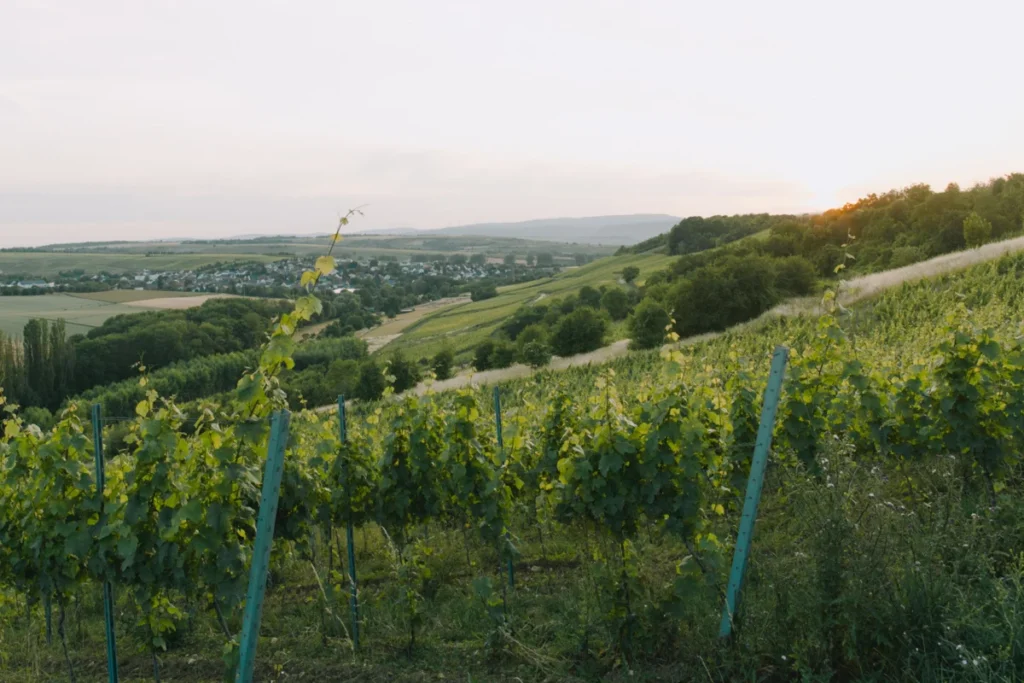
This philosophy has led to a granular focus on site selection. Producers are no longer planting Chardonnay in every available plot; they are matching the grape to specific limestone-rich soils that mirror the geological DNA of the Côte d’Or but with a unique German acidity profile.
Climate and Technical Challenges
While warming temperatures have made ripeness more reliable, they have introduced a new set of hurdles. The primary challenge for the modern German winemaker is the navigation of extreme weather events—specifically the increased frequency of spring frosts. To combat this, producers have become significantly more scientific in their canopy management and soil health programs, ensuring that even in a changing climate, the grapes retain the "flinty" tension that has become the hallmark of the region’s best examples.
Professional Perspectives: The Sommelier’s Verdict
The rise of German Chardonnay is not just a triumph of production; it is a shift in market perception. High-end sommeliers in major metropolitan markets—from New York to Chicago—are beginning to treat these wines with the same reverence previously reserved for the Old World elite.
The "Flinty" Signature
Matt Turner, wine director at New York City’s Lei Wine Bar, notes a distinct sensory profile that defines the new generation of German Chardonnay. "There is a sort of flinty, orange-citrus zest character that runs through these wines," Turner says. "It’s a tension that you don’t always find in warmer-climate Chardonnays. It feels electric."
The "No-Oak" Revolution
Carsten Saalwächter of Weingut Saalwächter recalls a time when Chardonnay was defined by oak influence. "When I was training, I sometimes wondered whether people actually liked Chardonnay or whether they simply liked oaky white wine," he jokes. His approach, like many of his peers, focuses on higher phenolics and texture rather than toast, ensuring the final product avoids the "lemon cheesecake" profile that plagued the category for decades.
Implications: The Quest for Legitimacy
The most significant hurdle remaining for German Chardonnay is not technical—it is psychological. The world is accustomed to Germany as a Riesling powerhouse. To pivot the global palate toward German Chardonnay requires overcoming a deeply entrenched bias.
Johannes Kopp of Weingut Kopp in Baden puts it bluntly: "Producing truly great Chardonnay is not the biggest challenge. Convincing people that Germany belongs among the world’s top Chardonnay producers is."
The Blind Tasting Test
The most effective tool for this persuasion is the blind tasting. During my visit to Moritz Kissinger, a producer currently pushing the boundaries of what is possible in the region, the proof was in the glass. Pouring a blind flight of 13 wines from global heavyweights alongside his own, the German Chardonnays were not just competitive; they were often indistinguishable from, and sometimes superior to, their international peers in terms of focus and energy.
Conclusion: A Future Without Borders
The real story of German Chardonnay is that it has stopped trying to be something else. As Tobias Knewitz aptly noted, "We don’t want to make Burgundy in Germany. We want to make Welzbachtal."
This move toward regional expression is the final piece of the puzzle. By embracing the specific acidity, the unique geological profile of their vineyards, and the rigorous, clean winemaking standards of the new generation, Germany has carved out a permanent place in the Chardonnay conversation.
As I look back on those 500 bottles tasted this spring, the conclusion is clear: we are witnessing the birth of a new classic. Whether it is the taut, mineral-driven styles of the Rheinhessen or the broader, more textured expressions from the Baden region, German Chardonnay has moved beyond the "alternative" status. It is now a primary choice for any collector or drinker seeking precision, transparency, and the honest expression of place.
The next time you reach for a bottle of Chardonnay, the most exciting option on the shelf may well be the one with a German label. The argument for Germany’s seat at the table is no longer a matter of opinion—it is a matter of record.