The Uncanny Menu: How AI-Generated "Slop" is Reshaping Our Dining Experience
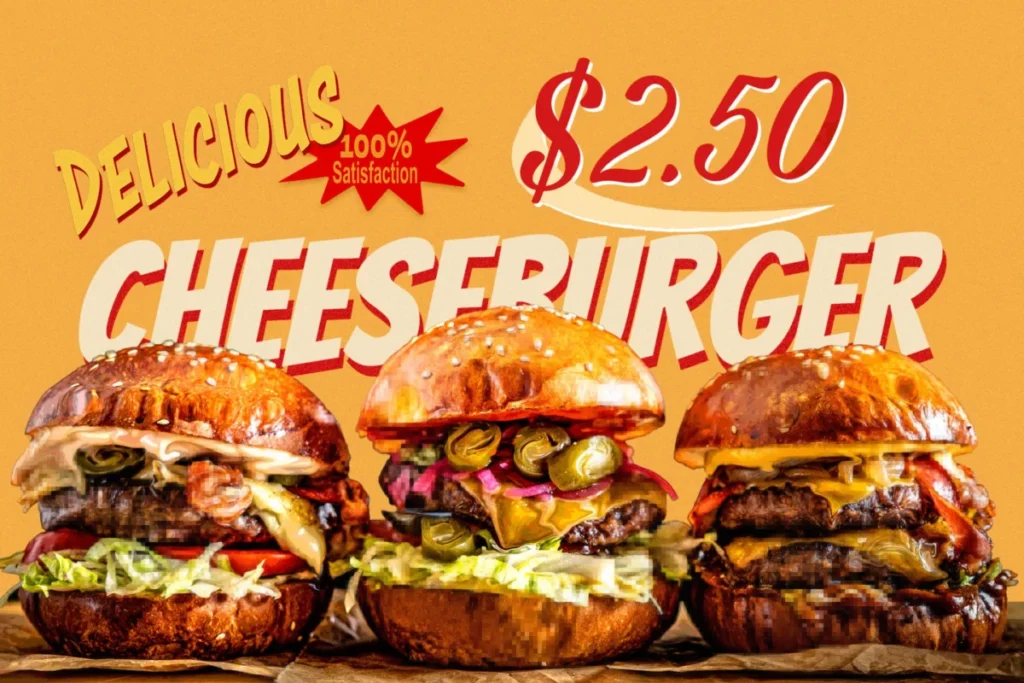
The morning commute has become an exercise in surrealism. As one walks past the local taco truck, the menu board no longer displays crisp, appetizing photos of al pastor or carnitas. Instead, it features images that trigger an immediate, visceral sense of wrongness: tacos that seem to melt into their own garnish, meats that resemble alien geology, and salsas with the consistency of glowing, synthetic sludge.
This is the era of "AI menu slop"—a growing trend of generative imagery that has migrated from the digital fringes of social media onto the physical walls of our neighborhood eateries. While restaurant owners are turning to artificial intelligence in a desperate bid to compete in an increasingly digital-first delivery market, the result is often a collection of images that are not just unappealing, but actively repulsive.
The Anatomy of the "ChatGPT Flyer Pandemic"
The current crisis in food imagery is widely considered an extension of what analysts have dubbed the "ChatGPT flyer pandemic." As generative AI tools have become more accessible, small business owners—often operating on razor-thin margins—have begun outsourcing their marketing creative to algorithms.
The aesthetic is distinctively "off-putting." Consumers have taken to social media to document the phenomenon: maggot-infested-looking burritos, pasta dishes that appear to be forged from glossy plastic, and entrées featuring impossible geometries. These images lack the soul of professional food photography, often failing to account for basic human anatomy or the physical properties of cooked food.
However, these images are merely the tip of the iceberg. The integration of generative AI into the restaurant industry is not limited to the visual presentation of food; it is increasingly influencing the very composition of the dishes themselves.
Chronology of a Digital Takeover
To understand how we arrived at the current state of menu-based absurdity, one must look at the evolution of the online ordering ecosystem.
The Rise of the Digital Menu (2015–2020): As delivery apps like Uber Eats, DoorDash, and Grubhub gained market dominance, the restaurant industry underwent a fundamental shift. Physical storefronts became secondary to their digital presence. Visibility on these platforms became the primary driver of revenue, placing immense pressure on owners to provide high-quality visuals for every item on their menu.
The Cost Barrier (2020–2023): Professional food photography is an expensive, time-consuming endeavor. For a local deli or food truck, hiring a stylist and a photographer for a full menu refresh can cost thousands of dollars. When generative AI models like Midjourney and DALL-E exploded in popularity, they appeared to offer a "free" or low-cost solution to a logistical nightmare.
The "Slop" Proliferation (2024–Present): What began as an attempt to mimic professional photography quickly devolved into a flood of low-quality, hallucinated imagery. As these tools became integrated into basic design software, restaurant owners began using them without curation. Today, the trend has breached the digital wall, appearing on printed posters and window signs, bringing the uncanny valley into our physical streets.
Supporting Data: The Scale of the Shift
The move toward AI is not a fringe occurrence; it is a widespread industry pivot. According to a recent report by Toast, a leading point-of-sale and restaurant management platform, approximately 85% of restaurateurs now express comfort with using AI-driven tools to manage their business operations.
This data point, while indicating high adoption rates, masks a significant lack of technical literacy regarding the quality of output. The industry is currently divided between two camps: those who use AI as a crutch to replace photography, and those who use it as a sophisticated data-processing tool.
"I went to order pizza one night on Uber Eats," says Brendan Sweeney, CEO and cofounder of Popmenu. "There were five different pizza places that were using the same AI-generated image." This redundancy highlights a major flaw in the current model: the loss of brand identity. When a restaurant uses a stock-generated image of a burger, they lose the ability to showcase what makes their specific kitchen unique.

Official Responses and Industry Perspectives
The backlash against "slop" has prompted a defensive posture from some in the tech sector, while others are proposing a middle ground.
The Data-Driven Approach
Companies like Tastewise represent the "pro-AI" side of the argument, focusing on the backend rather than the visual output. Tastewise partners with major food conglomerates, including Nestlé and PepsiCo, using "agentic" automations to predict market trends. Their tool, TasteGPT, analyzes billions of data points to inform menu development.
Michael Bortinger, director of marketing and partnerships at Tastewise, argues that the AI’s value lies in its predictive capability. "The bigger question for them is how do they guide and train the AI on what should be in that burger," he explains. By analyzing consumer behavior, TasteGPT can identify emerging trends—such as the rise of strawberry matcha or the ongoing demand for "new formats" of pickle-flavored items—long before they reach the mainstream.
The Case for Authentic Enhancement
Conversely, leaders like Brendan Sweeney advocate for a "human-in-the-loop" approach. Rather than relying on a chatbot to "dream up" a burger from scratch, Sweeney encourages restaurants to use their smartphones to take photos of their actual food, then use AI to enhance lighting, consistency, and presentation. "AI can now very easily patch those up, plate them all the same, and make the lighting consistent," Sweeney notes. "I think that’s where the value is."
The Implications of the AI Backlash
The proliferation of "slop" has catalyzed a counter-movement. In an era of increasing synthetic content, authenticity has become a premium commodity.
The Cultural Pivot
We are seeing a growing number of local restaurants explicitly advertising their "no-AI" status. Some have taken to posting handwritten notes on their menus or social media channels, signaling to customers that their food is prepared by human hands and documented by real cameras. This "analog pivot" is a direct response to the distrust generated by the uncanny images currently flooding the delivery apps.
Economic Consequences
The economic implications for restaurants are significant. While using a low-quality AI image may save a few hundred dollars in the short term, it risks long-term damage to brand reputation. In a competitive market, a customer who feels "tricked" by a menu image is less likely to return. The "AI-slop" look has become a cultural touchstone for poor quality, and restaurants that lean into it may find themselves associated with the very thing they are trying to hide: inauthenticity.
Future Outlook
As generative models improve, the "slop" will inevitably become more photorealistic. Eventually, we may reach a point where AI-generated images are indistinguishable from professional photography. However, this does not solve the fundamental problem of honesty.
The dining experience is predicated on expectation management. When the photo on the menu promises a specific texture or ingredient that the kitchen cannot deliver, the result is disappointment. Even if the AI becomes "perfect," the use of synthetic imagery remains a fundamental deviation from the core promise of a restaurant: a physical, human-made service.
Conclusion: The Case for the Imperfect
As we move forward, the "uncanny reign" of the AI menu may eventually subside, replaced by either higher-quality, deceptive imagery or a return to the comfort of the "real."
There is something inherently endearing about a slightly blurry, poorly lit photo of a taco on a local truck’s menu. It is an honest document of a human-made object. The rough edges of a real photograph tell the customer, "This is what you will get."
When we walk home today, the choice between the synthetic, alien-looking taco and the promise of a potentially imperfect, human-prepared meal is clear. In the war between efficiency and reality, the appetite for the real remains, for now, the most vital ingredient in the culinary experience. The future of dining may be augmented by data, but it must be grounded in the tangible if it hopes to survive the backlash of the digital age.