The Unseen Angle: How Our Toilets Shape Our Health – A Deep Dive into Defecation Posture and the Squatty Potty Phenomenon
MAIN FACTS
For generations, the act of defecation has been a private, often unspoken, bodily function. Yet, beneath the surface of this daily ritual lies a fascinating interplay of physiology, cultural norms, and surprisingly, engineering. Western societies, with their ubiquitous porcelain thrones, have largely adopted a sitting posture for bowel movements. This seemingly innocuous habit, however, introduces a nearly 90-degree kink in our digestive system—the "anorectal angle"—which, according to emerging research, may be a significant contributor to widespread digestive issues. In contrast, many traditional cultures across Asia and Africa have long favored a squatting position, which naturally straightens this crucial angle, facilitating easier and more complete bowel evacuation. The recent surge in popularity of devices like the Squatty Potty has brought this fundamental physiological difference into mainstream conversation, prompting scientific inquiry into what many previously considered an unmentionable topic.
The core premise is simple: when we sit upright on a standard toilet, the puborectalis muscle, which forms a sling around the rectum, remains partially contracted. This contraction creates the anorectal angle, designed to maintain continence. While this design brilliantly prevents accidental defecation, it also obstructs the natural flow when it’s time to "do our business." Squatting, by raising the knees above the hips, effectively relaxes this muscle, straightening the anorectal angle to allow for a smoother passage. This article explores the scientific evidence behind this theory, the efficacy of posture-modifying devices, alternative techniques, and ultimately, the profound influence of diet as the bedrock of bowel health.
CHRONOLOGY OF UNDERSTANDING
The shift from widespread squatting to sitting toilets is a relatively recent historical development, primarily driven by Western sanitation innovations and notions of comfort and hygiene. For millennia, humans squatted over holes or directly on the ground. The advent of the flush toilet in the 16th century, and its mass adoption from the 19th century onwards, fundamentally altered this ancient practice. However, it took considerable time for the potential physiological implications of this change to be formally questioned and investigated.
Early observations, often anecdotal, from medical professionals and anthropologists noted the apparent ease of defecation among populations who traditionally squatted. These observations, though lacking rigorous scientific backing initially, planted the seeds for later inquiry. The first formal studies exploring the biomechanics of defecation posture began to surface in the mid-to-late 20th century. These initial investigations, often utilizing techniques like defecography (X-ray studies of the rectum during defecation), started to quantify the differences in the anorectal angle between sitting and squatting positions.
By the early 2000s, the concept of modifying toilet posture gained traction, leading to the development of rudimentary footstools aimed at mimicking the squatting position on a standard toilet. These early iterations, however, were often criticized for providing only a minimal elevation—typically around four inches—which some researchers found insufficient to induce a significant physiological change or improve self-reported defecation difficulty or time. A key study published in 2003, for instance, found no significant difference in self-described difficulty or average time spent on the toilet with these smaller risers. This indicated that simply elevating the feet wasn’t enough; the degree of elevation and the resulting change in body geometry were critical.
This understanding paved the way for more robust solutions, culminating in the popularization of products like the Squatty Potty. With its approximately eight-inch elevation, it aimed to more closely replicate a natural squat. The subsequent testing of such devices marked a pivotal moment, shifting the conversation from theoretical biomechanics to tangible, measurable improvements in user experience. Concurrently, researchers began exploring other non-device-based posture modifications, such as the "Thinker" position, seeking alternative, accessible methods to achieve similar physiological benefits.
SUPPORTING DATA AND SCIENTIFIC MECHANISMS
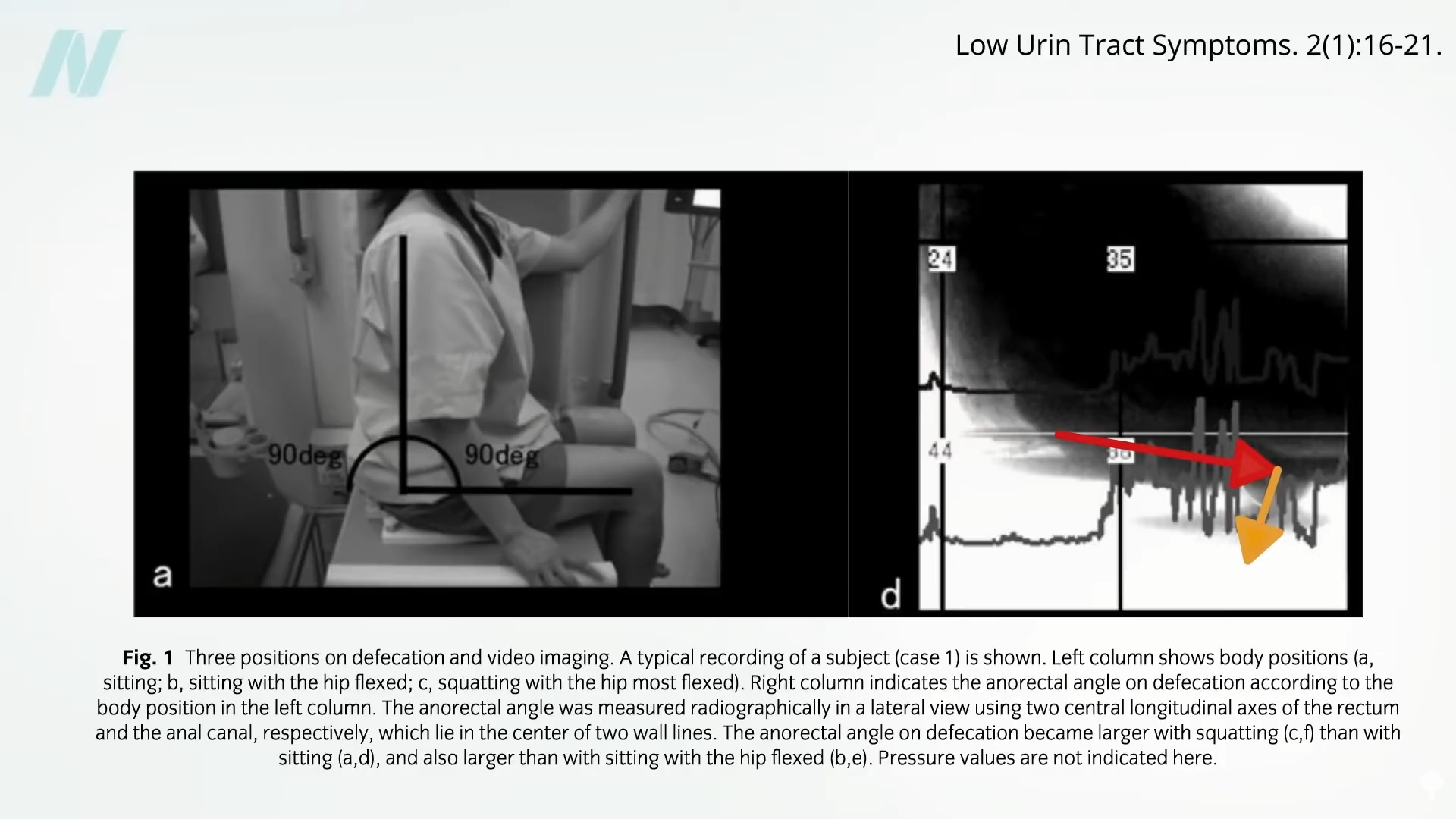
The scientific basis for the efficacy of squatting or squat-like postures lies in the anatomy of the pelvic floor. Central to this is the puborectalis muscle, a U-shaped muscle that loops around the rectum. In a sitting posture, this muscle is partially contracted, creating the acute anorectal angle (approximately 90 degrees) that helps maintain fecal continence. This "kink" acts like a check valve, preventing stool from falling out involuntarily.
When an individual squats, the thighs press against the abdomen, and the knees are raised significantly higher than the hips. This body position causes the puborectalis muscle to relax and straighten, effectively widening the anorectal angle. The rectum then becomes a more direct, unobstructed channel for stool to pass through.
Numerous studies have explored these mechanisms and their practical implications:
-
The Anorectal Angle: Cinedefecography, a specialized X-ray procedure that records the act of defecation, has been instrumental in visualizing this anatomical change. When sitting, the angle is typically around 90 degrees. In a full squat, or when using an effective squatting aid, this angle can increase significantly, sometimes exceeding 120 or even 130 degrees. This straightening reduces the resistance to stool passage.
-
Early Footstool Limitations: As mentioned, initial trials with smaller footstools (e.g., four inches) often yielded inconclusive results. Participants reported no significant improvement in perceived difficulty or defecation time. This highlighted that a minimal elevation might not be sufficient to fully relax the puborectalis muscle and adequately straighten the anorectal angle. The discomfort reported in some trials with even six-inch risers suggests a critical balance between effective posture modification and user comfort is needed.
-
The Squatty Potty Trial: More recent and specific research, focusing on devices like the Squatty Potty (which typically offers an eight-inch lift), has demonstrated more promising outcomes. A study involving a "Defecation Posture Modification Device" (DPDM), essentially a Squatty Potty, showed significant positive results. Participants reported:
- Increased feelings of bowel emptiness: Indicating more complete evacuation.
- Reduced straining: A crucial benefit, as straining can lead to various health problems.
- Decreased defecation time: Participants spent, on average, about a minute less on the toilet. While the study noted some initial discomfort, the overall benefits outweighed this for most users.
-
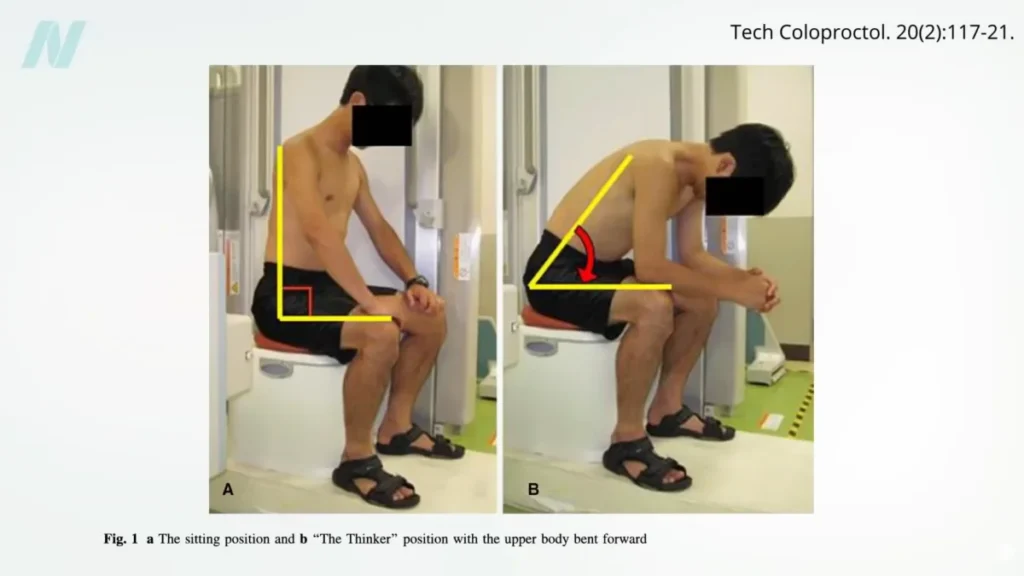
"The Thinker" Position: Beyond external aids, researchers have investigated intrinsic body modifications. Inspired by Rodin’s famous sculpture, "The Thinker" position involves leaning significantly forward while seated on a standard toilet. Cleveland Clinic researchers utilized cinedefecography to study this posture, revealing its remarkable effectiveness. They found that "The Thinker" position could open the anorectal angle to over 130 degrees—a wider angle than typically achieved by simply raising the feet with some footstools. This suggests that leaning forward, by changing the pelvic tilt, can independently contribute to puborectalis muscle relaxation and a more favorable angle for defecation. While highly promising for its accessibility and cost-effectiveness, its benefits for constipation relief still await formal, large-scale clinical trials.
OFFICIAL RESPONSES AND CULTURAL SHIFTS
For a long time, the topic of defecation posture was considered taboo within mainstream medical discourse in Western societies. Physicians, perhaps due to cultural squeamishness or a lack of specialized training in this specific area, were often hesitant to discuss "such an unmentionable bodily function." The prevailing medical approach to constipation primarily focused on dietary fiber, hydration, laxatives, or in severe cases, surgical interventions, without much attention paid to the mechanics of the act itself. As the article humorously notes, "Doctors don’t know squat."
However, the rise of popular culture phenomena and commercial entities like Squatty Potty has forced a re-evaluation. The Squatty Potty, through its viral marketing campaigns and appearance on shows like Shark Tank, effectively demystified and destigmatized the conversation around bowel movements. This commercial success, driven by genuine user satisfaction, has prompted the medical community to take a closer look at the scientific underpinnings of these claims.
While there hasn’t been a sweeping "official endorsement" of squatting platforms from major medical bodies, there’s a growing recognition within gastroenterology and pelvic floor therapy circles regarding the physiological advantages of an optimized defecation posture. Many healthcare professionals now recommend footstools as a non-pharmacological intervention for patients struggling with constipation, hemorrhoids, or chronic straining. This shift represents a move towards more holistic and patient-centered care, acknowledging that simple biomechanical adjustments can complement traditional medical advice.
The cultural shift is also evident in public discourse. What was once a topic confined to alternative health circles is now openly discussed, reviewed, and recommended. This openness is crucial not just for selling products, but for empowering individuals to understand their own bodies better and seek non-invasive solutions to common, yet often embarrassing, health problems.
IMPLICATIONS FOR HEALTH AND DIETARY CONSIDERATIONS
The implications of adopting a more physiologically natural defecation posture extend beyond mere comfort. Chronic straining during bowel movements is not just unpleasant; it carries significant health risks. The act of "bearing down" or performing a Valsalva maneuver dramatically increases intra-abdominal and intrathoracic pressure, which in turn elevates blood pressure in the heart and brain. For individuals with underlying cardiovascular conditions, this sudden spike can be dangerous, potentially leading to:
- Heart Attack: Increased strain on the heart, especially in those with pre-existing coronary artery disease.
- Stroke: Elevated blood pressure can rupture fragile blood vessels in the brain.
- Hemorrhoids: Chronic straining puts immense pressure on the veins in the rectum and anus, causing them to swell and become painful.
- Pelvic Organ Prolapse: Weakening of the pelvic floor muscles over time can lead to the descent of organs like the bladder, uterus, or rectum.
The extreme example of bedpan use, where an individual lies flat on their back, illustrates the worst-case scenario. This position maximizes the anorectal angle, making defecation incredibly difficult and requiring maximal straining. It’s no coincidence that straining while passing stool has been identified as a leading cause of sudden death from heart attack and stroke in some populations, particularly in Japan where studies have highlighted this daily activity as often occurring at the time of death. For bedridden patients, elevating the head and torso as much as possible is a critical, life-saving measure to reduce this risk.
However, amidst the growing enthusiasm for posture modification, it’s crucial to heed a nearly 50-year-old commentary that serves as a vital reminder: while posture certainly plays a role, diet remains the fundamental determinant of bowel health.
The "man who squats because he has no modern plumbing also tends to eat food that is less refined," the commentary observed. This pithy statement encapsulates a profound truth. Traditional populations who squat often consume diets rich in whole, unprocessed foods—abundant in fiber, fruits, vegetables, and legumes. Modern Western diets, in stark contrast, are frequently characterized by highly refined grains, processed foods, and a scarcity of dietary fiber.
Dietary Fiber: The Unsung Hero
Dietary fiber, both soluble and insoluble, is essential for healthy bowel function.
- Insoluble fiber (found in whole grains, vegetables, wheat bran) adds bulk to stool, helping it move through the digestive tract more quickly.
- Soluble fiber (found in oats, beans, fruits, psyllium) absorbs water, forming a gel-like substance that softens stool, making it easier to pass.
When the diet lacks sufficient fiber, stools become hard, small, and difficult to pass, regardless of posture. Adding adequate fiber to the diet—along with sufficient hydration—can transform bowel movements, making them effortless and regular, often without the need for extreme postural adjustments. As the article concludes, "So, maybe if we just change the design of our diets, we don’t have to change the design of our plumbing."
This isn’t to say that posture is irrelevant. For individuals already struggling with constipation or straining, optimizing their defecation posture can provide immediate relief and reduce associated health risks. However, for sustainable, long-term bowel health, a high-fiber, whole-food diet should be the primary focus. A holistic approach that combines both:
- A diet rich in whole, unprocessed plant foods (fruits, vegetables, legumes, whole grains) to ensure soft, bulky stools.
- Adequate hydration to keep stools moist.
- An optimized defecation posture (whether through a squatting platform or simply leaning forward) to facilitate easy passage.
This combined strategy offers the most comprehensive pathway to effortless and healthy bowel movements, mitigating the risks associated with chronic constipation and straining, and ultimately contributing to overall well-being. The conversation around the Squatty Potty and similar devices has successfully shone a light on a critical, often-overlooked aspect of human physiology, but it must be viewed within the broader context of a healthy lifestyle, where diet undoubtedly reigns supreme.