The Art of the Pour: Inside Sushi Nakazawa’s Architectural Sake Revolution
By Sara Ventiera
Updated: September 4, 2026
Since its inception in 2013, Sushi Nakazawa has functioned as more than just a restaurant; it has served as a cultural bridge between the traditional Edomae-style sushi mastery of Tokyo and the discerning palates of New York City. Founded by Chef Daisuke Nakazawa—a protégé of the legendary Jiro Ono, the subject of the seminal documentary Jiro Dreams of Sushi—the establishment quickly ascended to the upper echelons of the American culinary scene.
However, while Chef Nakazawa’s nigiri provides the soul of the experience, the heartbeat of the restaurant’s beverage program—led by Beverage Director Dean Fuerth—has quietly become the most significant sake collection in the United States. With the recent opening of their Los Angeles outpost this past spring, Sushi Nakazawa has moved beyond simply storing these liquid treasures. They have transformed them into an architectural centerpiece, fundamentally changing how the American dining public interacts with high-end Japanese rice wine.
The Evolution of an Icon: A Chronological Retrospective
The journey of Sushi Nakazawa is one of consistent, meticulous growth. To understand the gravity of their new Los Angeles cellar, one must look at the timeline of the brand’s commitment to viticulture and brewing excellence.
- 2013: Sushi Nakazawa opens in Greenwich Village, NYC. From day one, the focus is on a high-stakes, high-reward omakase experience. The beverage program is immediately prioritized to match the caliber of the fish.
- 2018–2022: The NYC flagship begins to garner international acclaim for its beverage program. The World of Fine Wine begins an unprecedented four-year streak of awarding the restaurant “Best Sake List, North America.”
- 2023: Planning for the expansion to Los Angeles begins. The team realizes that the "basement storage" model, necessitated by the spatial constraints of Manhattan, will not suffice for their vision of a West Coast flagship.
- 2026 (Spring): The Los Angeles location debuts. The centerpiece is a custom-engineered, glass-and-brass cellar designed specifically to bring the "hidden" inventory to the forefront of the guest experience.
Architectural Intent: The Design of the Cellar
In the cramped, vertical landscape of New York City, the restaurant’s vast collection of rare sakes was historically relegated to a climate-controlled basement. While functional, it kept the "story" of the sake—the provenance, the brewer’s history, and the scarcity—out of sight.
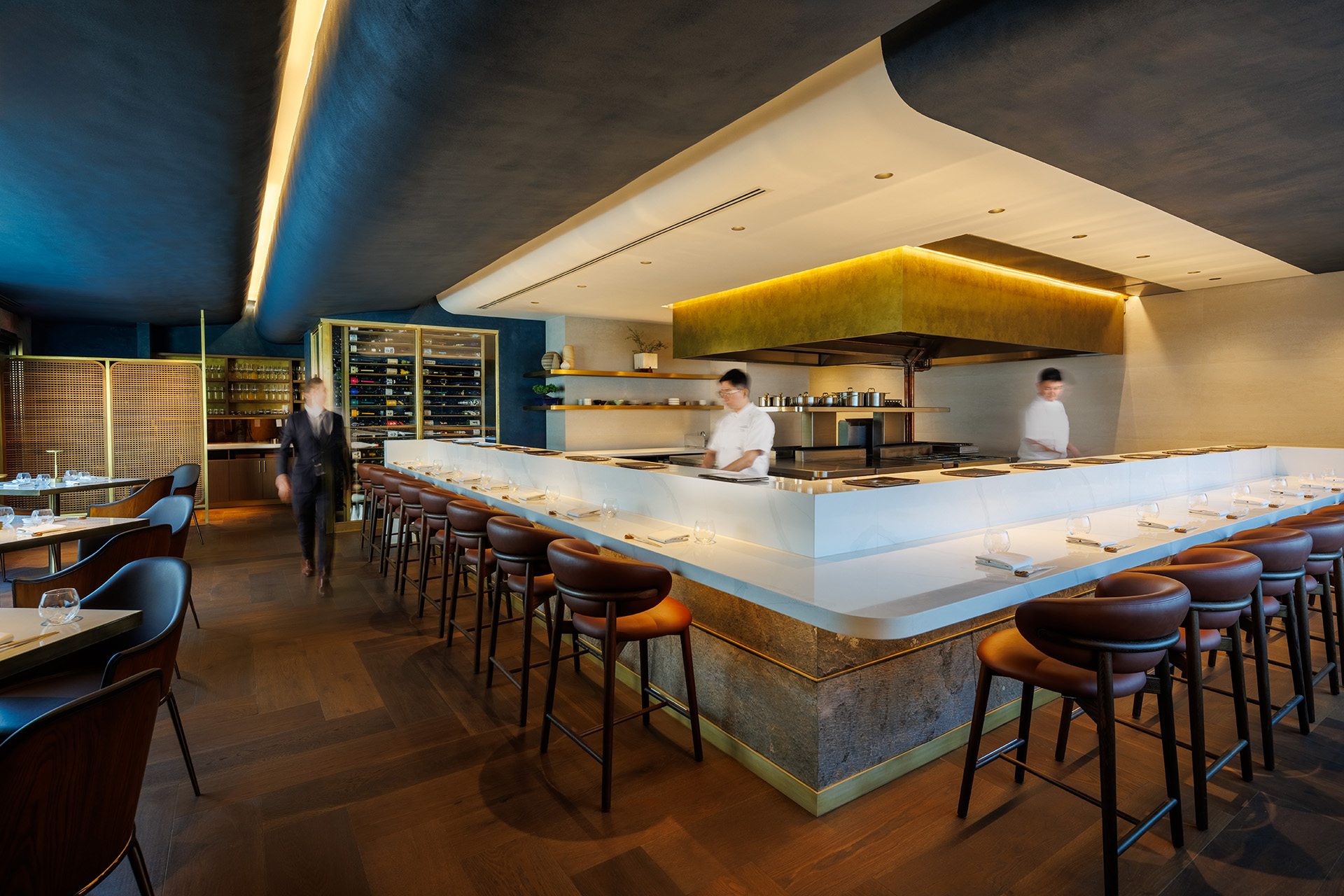
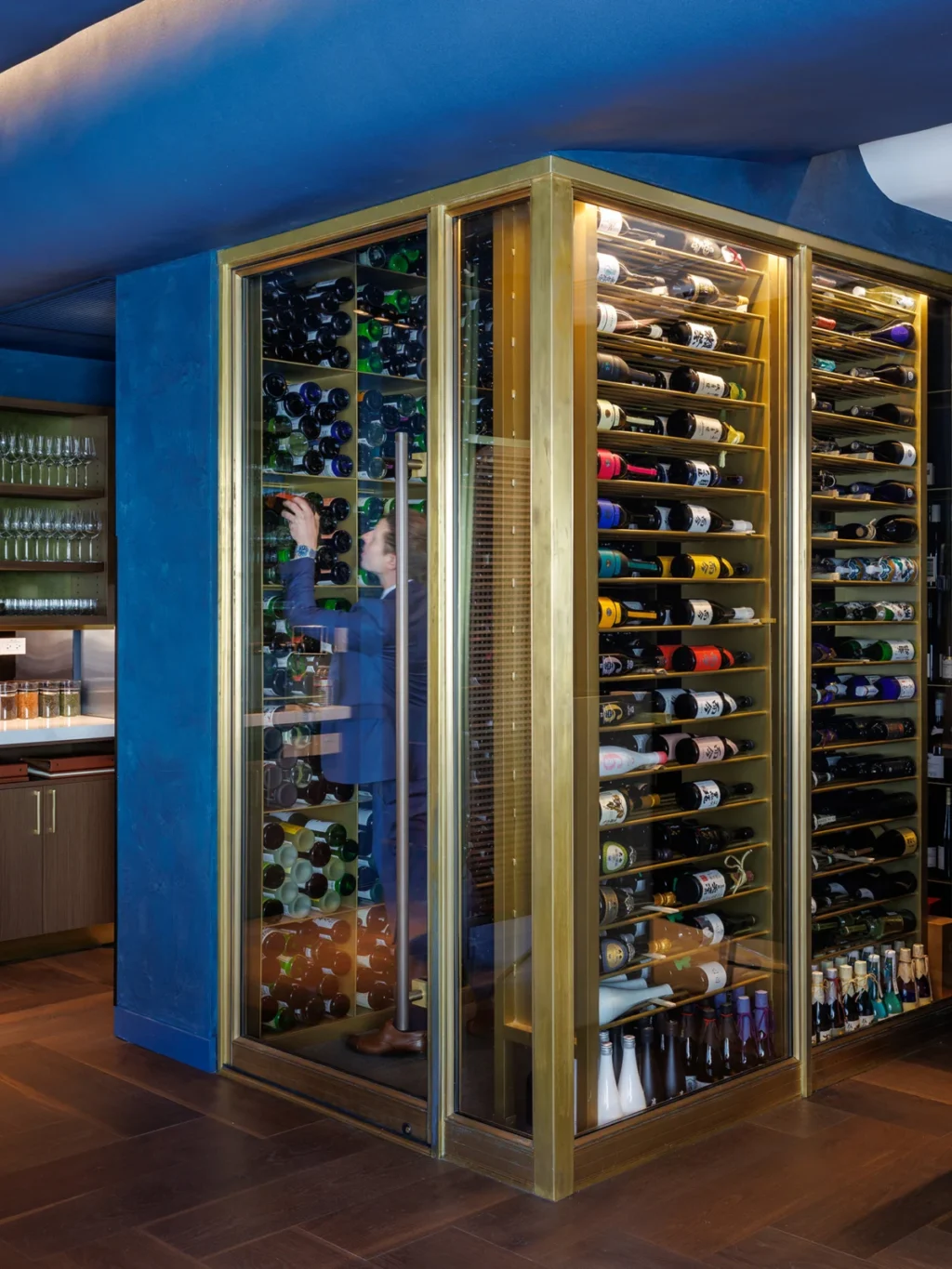
When designing the Los Angeles location, the mandate for the cellar was clear: transparency and elevation. The result is a stunning, modern showpiece constructed from polished brass and double-paned, climate-controlled glass. It is a label-forward design, allowing guests to visually map out the rarest bottles in the restaurant’s portfolio before they ever take their seats.
“Given that sake has become such a big part of the restaurant, we really wanted to put it on display,” says Dean Fuerth. “We wanted to showcase the rarities and the access we have to incredible beverages that we’ve been able to get through our personal relationships with producers—some of which less than a handful of bottles come into the country.”
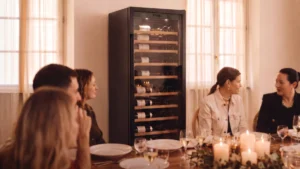
The cellar is a masterclass in functional design. It holds approximately 2,000 bottles across 68 distinct bins, all maintained at a precise 48 degrees Fahrenheit. While the brass shelves host 300 of the most "show-worthy" bottles, the restaurant has supplemented this with four high-tech EuroCave units, each capable of holding 200 bottles, to manage the overflow of the restaurant’s deep Champagne and white wine lists.
Data-Driven Distinction: The Scale of the Collection
The numbers behind the Sushi Nakazawa collection are staggering, particularly when viewed through the lens of a domestic restaurant operation. The Los Angeles location alone boasts 250 distinct sakes—the largest selection in California—and 350 wines. For comparison, the flagship New York location maintains an even larger inventory, with 450 sakes and 700 wines.
However, Fuerth is quick to point out that volume is not the goal; curation is. “We’re not just building a warehouse; we’re building a library,” he notes. By utilizing his experience in traditional French wine list development, Fuerth has applied a structured, tiered approach to the sake menu.

The Verticality of Flavor: A Case Study in Nizawa
To educate the guest, the list often presents multiple tiers from a single producer. For example, the Nizawa Sake Brewery lineup at Nakazawa is a perfect illustration of this philosophy:
- The Entry Point: The “Atago No Matsu,” a classic Honjozo-style sake, priced at $85. It provides a masterclass in how a small addition of brewer’s alcohol can brighten and elevate flavor.
- The Pinnacle: The Reikyo Crystal 0. This is a Junmai Daiginjo that sits at the absolute limit of technical brewing, featuring an 0.85% rice polishing ratio. At $17,500 per 500-milliliter bottle, it is not merely a drink; it is a collector’s artifact.
This breadth allows the staff to demonstrate the impact of rice polishing, water source, and regional terroir to guests who may be new to the nuances of sake.
The "God of Sake": Storytelling Through Display
The most unique feature of the new Los Angeles cellar is its role as a 3D narrative device. Fuerth utilizes the right-hand side of the display to curate a "vertical exploration" of the career of Noguchi Naohiko, widely revered as the "God of Sake Brewing."
By grouping bottles from the various historical breweries where Noguchi worked—culminating in his current work at the Noguchi Naohiko Sake Institute—the cellar provides a visual timeline of a master’s influence. It transforms the act of ordering a drink from a transactional choice into an educational journey. When a guest points to a bottle, the server does not just provide a price; they provide a historical context that anchors the beverage to the wider story of Japanese brewing.
Implications for the Fine Dining Landscape
The move by Sushi Nakazawa to elevate the physical storage and display of sake has profound implications for the future of fine dining in the United States.

1. The Professionalization of Sake Programs
For decades, sake was often treated as an afterthought in Japanese restaurants—a secondary beverage to the "real" wine list. Nakazawa’s investment suggests a shift: sake is now being treated with the same reverence as Grand Cru Burgundy or vintage Champagne. The move to dedicate significant square footage to a climate-controlled, aesthetic display indicates that restaurateurs view sake as a primary revenue and prestige driver.
2. The "Sommelier-Led" Experience
By hiring dedicated beverage directors like Fuerth, restaurants are signaling that the guest experience is no longer just about the chef’s vision. It is a dual-track experience where the liquid accompaniment is as carefully crafted as the menu. This increases the demand for specialized staff who can explain the intricacies of rice polishing ratios and brewery histories.
3. Supply Chain Relationships
The fact that Nakazawa has access to bottles where "less than a handful" reach the U.S. demonstrates the strength of the relationships built by the restaurant group. As the U.S. market becomes more sophisticated, we can expect to see more "exclusive" imports that bypass traditional distribution channels in favor of direct-to-restaurant partnerships.
Conclusion: A New Standard
Sushi Nakazawa’s new Los Angeles cellar is more than a storage solution; it is a statement of intent. By bringing their collection out of the shadows and into a meticulously designed, brass-and-glass display, they have signaled that the era of "hidden" beverage programs is coming to an end.
For the diner, this means an immersive experience where the history of brewing is visible, tangible, and accessible. For the industry, it sets a high-water mark for how to handle, display, and sell premium sake in a market that is only beginning to understand the depth of its potential. As the restaurant continues to bridge the gap between Tokyo’s traditions and the American palate, one thing remains certain: at Sushi Nakazawa, the story of the meal is told just as much by what is in the glass as by what is on the plate.