The Race Against Time: Advancing Listeria Control in Dairy Processing
In the high-stakes environment of dairy production, a positive Listeria monocytogenes result is far more than a mere laboratory notification. It is a clarion call that triggers a cascade of urgent operational, safety, and logistical questions. When a swab taken from a floor drain, a filler nozzle, or a conveyor gasket returns a positive result, food safety teams are thrust into a race against time. Is the contamination localized, or has it permeated the broader production environment? What is the status of the product currently in the supply chain? Most critically: how can the facility be rendered safe to resume production without jeopardizing consumer health?
Managing Listeria monocytogenes in a dairy environment is a complex, ongoing battle against a pathogen that is exceptionally well-adapted to survive in moist, refrigerated conditions. While listeriosis—the infection caused by the bacterium—is less frequent than other foodborne illnesses, its severity makes it a paramount public health concern. According to the World Health Organization, mortality rates for listeriosis range between 20 and 30 percent, posing a lethal risk to vulnerable populations, including pregnant individuals, the elderly, and the immunocompromised.
The Persistence Problem: Why Listeria Defies Standard Control
The primary challenge for dairy processors lies in the biological resilience of L. monocytogenes. Unlike many other common pathogens, Listeria thrives in the very conditions that define a dairy plant: refrigeration, high moisture, and the accumulation of organic residues. These factors allow the organism to establish "harborage sites"—microscopic niches in gaskets, conveyor components, and floor drains that are notoriously difficult to sanitize.
Once established, these colonies often evolve into biofilms. These microbial communities act as a protective shield, significantly reducing the efficacy of standard chemical sanitizers. Once a biofilm is formed, it acts as a persistent reservoir, potentially shedding bacteria into the production environment over weeks or even months.
While pasteurization remains the industry’s most robust defense against Listeria in the finished product, it is not a panacea. The true vulnerability exists in the post-processing environment. Once pasteurized product moves into filling, packaging, and storage, any contact with a contaminated surface—or even poor handling practices by personnel—can lead to the reintroduction of the pathogen. Consequently, the industry has shifted its focus from purely product-based testing to comprehensive Environmental Monitoring Programs (EMPs).
Chronology of a Crisis: From Detection to Action
The timeline of a Listeria intervention is often the deciding factor in whether a minor environmental concern evolves into a massive product recall.
- The Sampling Phase: Facilities utilize routine swabbing to track the presence of Listeria. This is not merely a "find and kill" strategy; it is a surveillance operation designed to map the movement of the organism through the facility.
- The Incubation Gap: Traditionally, culture-based testing has been the industry gold standard. However, these methods require enrichment to recover stressed cells, followed by selective plating and confirmation. This process typically consumes 4 to 5 days.
- The Decision Window: During this 96-to-120-hour window, the dairy processor is in a state of suspended animation. Decisions regarding product holds, temporary production shutdowns, and intensified sanitation must be made under conditions of uncertainty.
- The Intervention: If a positive result is confirmed, the facility must trace the source, sanitize the affected area, and conduct re-testing.
This multi-day lag is the primary driver for the adoption of rapid detection technologies. By shortening the "time to result," facilities can initiate corrective actions while the contamination is still nascent, preventing it from migrating into finished goods.
Supporting Data and Technological Evolution
The push for faster results has necessitated a pivot toward molecular and immunological detection methods.
Molecular Detection: The Genetic Advantage
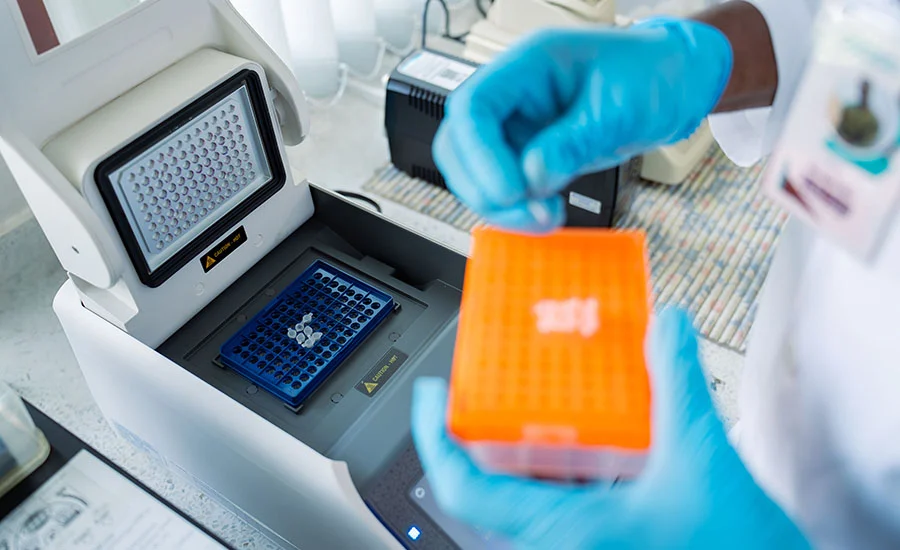
Molecular techniques, such as Polymerase Chain Reaction (PCR) and quantitative PCR (qPCR), have revolutionized the field by identifying specific genetic markers of L. monocytogenes. Because these methods target the DNA of the organism rather than relying on successful culture growth, they offer a significant reduction in detection time.
Emerging technologies, including CRISPR-based diagnostic platforms, represent the next frontier. By combining high-specificity target recognition with rapid signal generation, these platforms promise to bring the speed of molecular diagnostics into a more accessible format. Furthermore, multiplex PCR allows laboratories to screen for multiple pathogens simultaneously, providing a more holistic view of the plant’s microbial profile.

Immunological and Biosensor Platforms
Immunological techniques, such as lateral flow immunoassay strips, provide a cost-effective, rapid preliminary assessment. While they may require enrichment for low-level contamination, their simplicity makes them ideal for on-floor screening. Looking forward, nanotechnology-based biosensors are currently being optimized to provide near-instantaneous feedback. By converting biological interactions into measurable electrochemical or optical signals, these devices could eventually allow for "real-time" monitoring of high-risk equipment.
Official Responses and Regulatory Implications
Regulatory bodies, including the FDA and the USDA, have increasingly emphasized the necessity of a "seek and destroy" mentality in dairy facilities. Official guidelines mandate that companies not only test for the presence of Listeria but also maintain rigorous documentation of their environmental monitoring data.
The regulatory expectation is clear: a negative product test result is not a substitute for a robust environmental program. Regulators expect processors to treat the facility environment as the primary indicator of safety. When Listeria is found in an environmental sample, the authorities require a detailed investigation into the source, the extent of the contamination, and the efficacy of the subsequent corrective actions. Failing to act on environmental "near-misses" is increasingly viewed as a failure of the food safety system itself.
Implications for Future Operations
The integration of rapid technology into the dairy industry has profound implications for the future of food safety. We are entering an era of "predictive hygiene," where data, not just lab results, dictates operational strategy.
AI and Predictive Analytics
The integration of Artificial Intelligence (AI) into environmental monitoring is a game-changer. By analyzing years of sanitation records, swab results, and production movement patterns, AI can help facilities map "hot spots" of potential Listeria growth. This allows for proactive intervention—cleaning or maintenance—before the pathogen even registers as a positive test.
Digital Verification Tools
Modern facilities are moving away from paper-based logs. Digital monitoring systems allow quality assurance teams to track trends in real-time. If a specific filler head consistently shows higher microbial counts over a six-month period, the digital data will highlight this pattern, prompting an engineering review of the equipment design rather than just repeated cleaning.
The Human Factor: A Culture of Safety
Despite the sophistication of molecular testing and AI, the most critical component of Listeria control remains the "food safety culture." Technology is merely a tool; its value is limited if the facility’s staff does not understand the importance of hygienic zoning, correct gowning procedures, and the necessity of reporting potential issues without fear of reprisal.
The industry must recognize that the goal is not to eliminate Listeria—which is biologically impossible in an open environment—but to manage the risk through constant vigilance. Rapid detection is the bridge between a dangerous, undetected contamination event and a controlled, preventive success story.
Conclusion: A Shift in Perspective
The control of L. monocytogenes in dairy plants is a high-stakes marathon, not a sprint. As technology continues to compress the time required to detect, identify, and respond to potential contamination, the role of the food safety professional is shifting from reactive "firefighting" to proactive risk management.
By embracing rapid detection technologies, investing in hygienic equipment design, and fostering a deep, pervasive culture of safety, the dairy industry can effectively mitigate the threat of Listeria. The ultimate success of these programs will be measured not by how many positive samples are identified, but by how effectively those findings are used to keep the pathogen out of the food supply, ensuring that the dairy products enjoyed by millions remain safe, nutritious, and free from harm. In this context, time is not just money—it is the very foundation of public health.