The Unseen Backlash: How Healthy Options Can Drive Unhealthy Choices
Main Facts
In a perplexing twist of human psychology, well-intentioned efforts to promote healthier eating, such as calorie labeling on menus or the introduction of healthy food options, can paradoxically lead consumers to make even worse dietary decisions. This counterintuitive phenomenon is rooted in a fascinating trio of cognitive biases: "vicarious goal fulfillment," "self-licensing," and the pervasive "health halo effect." Far from empowering individuals to make informed, healthier choices, these interventions often serve to justify indulgence, warp perceptions, and ultimately undermine public health goals, revealing a profound disconnect between policy intent and actual consumer behavior.
Chronology: The Disappointing Trajectory of Calorie Labeling
The push for greater transparency in food choices gained significant momentum in the United States over the last decade. In 2017, a landmark federal mandate came into effect, requiring national chain restaurants to display calorie counts prominently on their menus. This initiative, met with considerable fanfare, was built on the logical premise that providing consumers with clear nutritional information would enable them to make healthier food choices when dining out. The expectation was that armed with caloric data, individuals would naturally gravitate towards options that helped them stay within their daily energy needs, thereby contributing to a healthier populace.
However, the real-world impact of these regulations has proven to be profoundly underwhelming. Research has consistently demonstrated that calorie labels are largely ineffective, contributing to an average reduction of a mere eight calories per meal – an amount so negligible it can be considered statistically insignificant. This minimal impact stands in stark contrast to the significant resources and policy efforts invested in their implementation.
Interestingly, the ease with which some of these regulations were passed could have been an early indicator of their limited efficacy. Consider the example of McDonald’s, which voluntarily began publishing calorie information nationally as early as 2012. This proactive step came after a similar labeling mandate in New York City had already been found to have no discernible overall effect on consumer behavior. Studies from the period suggested that such labeling initiatives could, in fact, boost "perceptions of the restaurant’s concern for consumers’ well-being," even as they carefully avoided undermining sales of high-calorie flagship items like the Big Mac. For industry giants, voluntary compliance might have been a strategic move, allowing them to project an image of corporate responsibility without genuinely impacting their bottom line or forcing a significant shift in consumer purchasing habits.
Simultaneously with its 2012 calorie-labeling announcement, McDonald’s also unveiled plans to incorporate seasonal produce into its menu, a move that, on the surface, appeared unequivocally positive. Yet, as psychological research reveals, the addition of a healthy option can, ironically, propel individuals toward even unhealthier choices. This complex interplay between consumer perception, psychological biases, and marketing strategies highlights the intricate challenges in guiding public health outcomes.
Supporting Data: The Mechanisms of Indulgence
The surprising failure of calorie labeling and the paradoxical effect of introducing healthy options can be attributed to several deeply ingrained psychological glitches that influence human decision-making, particularly concerning food. These biases demonstrate that simply providing information or alternatives is often not enough to override subconscious impulses.
The Peril of Choice: How Healthy Options Backfire
One of the most striking demonstrations of this phenomenon comes from studies on "vicarious goal fulfillment," where the mere presence of a healthy option ironically leads to an indulgent decision.
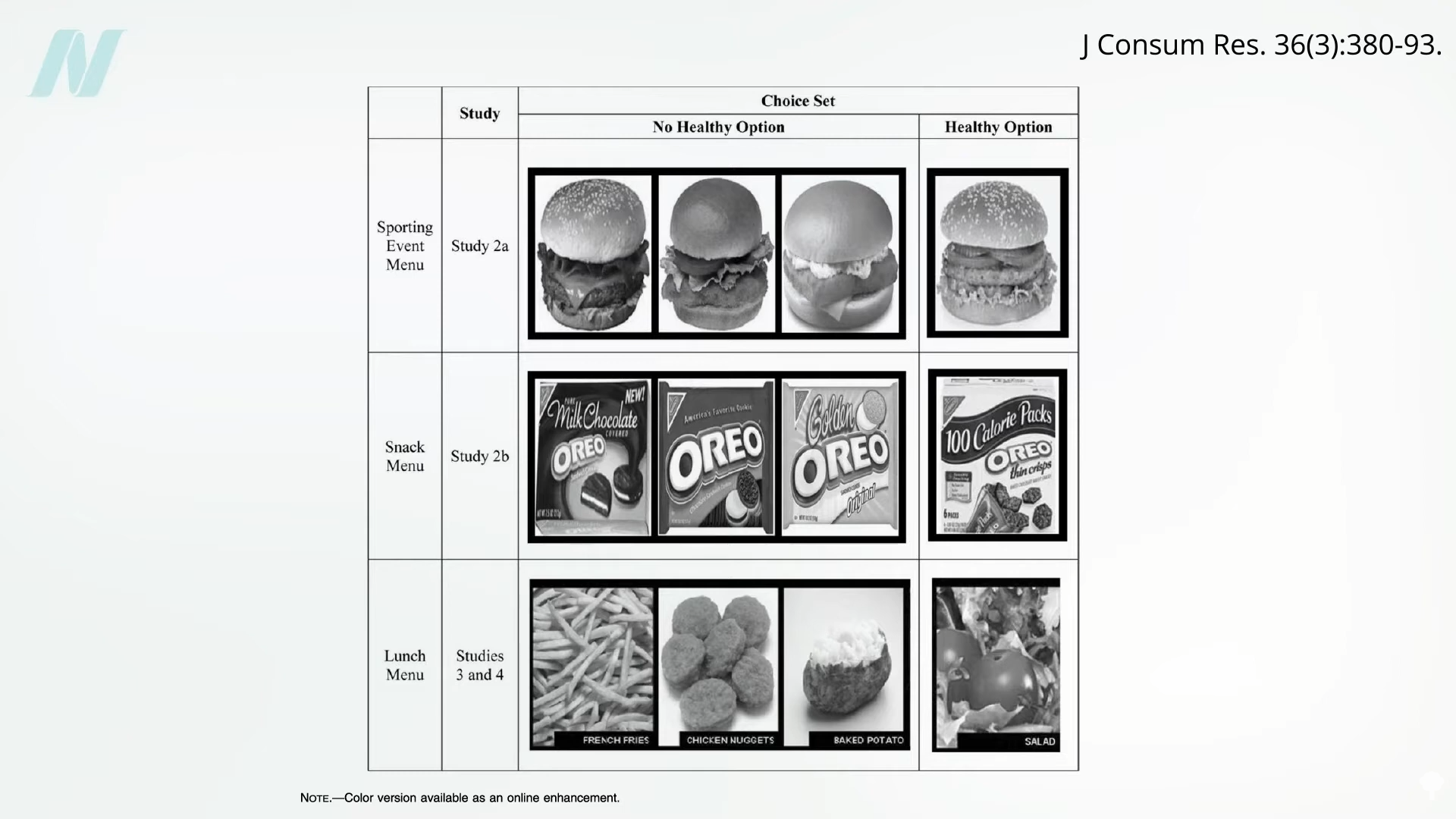
Consider a scenario where people are offered a choice of side dishes: French fries (unhealthy), a baked potato (neutral), or a side salad (healthy). In a baseline scenario without the salad, if individuals choose between fries and a baked potato, only about 10% will opt for the indulgent fries. However, when a third, even healthier option like a side salad is introduced, the dynamic shifts dramatically. Instead of encouraging more people to choose the salad or the baked potato, the proportion of individuals who choose the French fries actually triples to 33%. Without the salad, only one in ten chose fries; with the salad, a third did. This suggests that the presence of the salad, even if not chosen, somehow liberates consumers to make a less healthy selection.
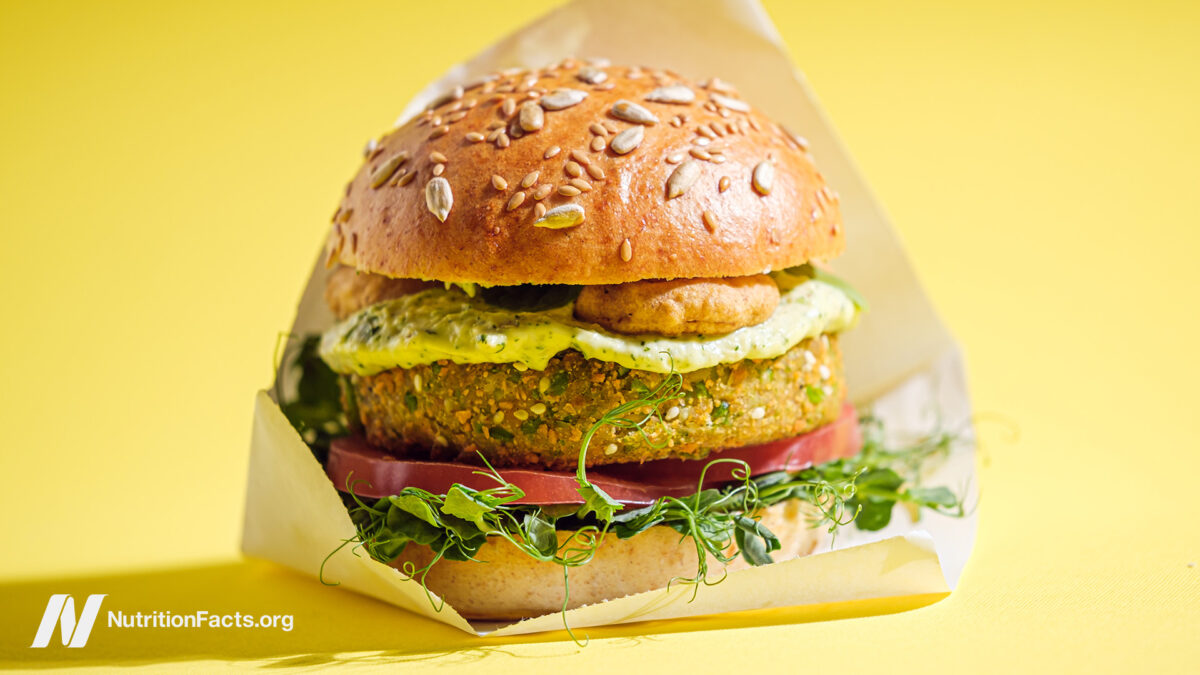
A similar pattern emerges with main course selections. In a "No Healthy Option" scenario, participants chose between a bacon cheeseburger, a chicken sandwich, or a fish sandwich, with 17% opting for the cheeseburger. When the fish sandwich was replaced with a veggie burger – a clearly healthier alternative – the preference for the bacon cheeseburger doubled to 37%. How can the mere sight of a healthy option push people towards unhealthier choices?
The paper describing these experiments, aptly titled "Vicarious Goal Fulfillment: When the Mere Presence of a Healthy Option Leads to an Ironically Indulgent Decision," posits that seeing the salad or veggie burger prompts individuals to make a mental note to choose that healthy option at some nebulous "next time." This mental commitment, however fleeting, then serves as an excuse to indulge in an unhealthier choice in the present. It’s a form of psychological accounting where the "thought" of future health-conscious behavior offsets current indulgence.
Self-Licensing: The Green Light for Guilt-Free Indulgence
This leads directly to another fascinating glitch in human psychology known as self-licensing. This bias occurs when individuals unwittingly justify actions that deviate from their goals after having just done something that aligns with them. It’s the classic scenario of rewarding oneself with a donut because of last week’s weight loss, an indulgence that ultimately sets back progress.
The phenomenon is vividly illustrated in studies involving smokers. When smokers were given what they believed to be "vitamin C" supplements, they subsequently smoked significantly more cigarettes than a control group who received identical sugar pills but were told they were placebos. The group believing they were taking supplements smoked nearly twice as much, perhaps subconsciously thinking that since they had just done something beneficial for their health, they could "live a little," potentially leading to living a little… less.
The implications of self-licensing extend beyond smoking and diet, influencing other lifestyle choices. Participants who believed they were taking dietary supplements (which were, in fact, placebos) not only expressed less desire to engage in subsequent exercise but also followed through by walking approximately a third less than those informed they were taking placebos. Furthermore, the misled participants were more likely to choose a buffet over a "healthy, organic meal." This raises the question: would they also eat more?
A seminal study titled "The Liberating Effect of Weight Loss Supplements on Dietary Control" put this to the test. Participants were randomized to take either a known placebo or a purported weight-loss supplement (which was, again, the same placebo). They were later covertly observed at a buffet. The "supplement" subjects not only consumed more food but also selected less healthy items. In a bogus "taste test," they ate about 30% more candy and ordered more sugary drinks. The investigators concluded, "Hence, people who rely on dietary supplements for health protection may pay a hidden price: the curse of licensed self-indulgence." This highlights how the perception of having made a healthy choice, even if illusory, can lead to a compensatory pattern of unhealthy behavior.
Circling back to the vicarious goal fulfillment studies, the researchers discovered that it’s not just making progress towards a goal that rationalizes undermining decisions, but even just considering making progress can have a similar licensing effect. Crucially, study participants were often moved to make not just an unhealthier choice, but the unhealthiest choice available. This defies the intuitive assumption that the presence of a healthier alternative might encourage a middle-ground selection. Instead, it often pushes individuals in the exact opposite direction of their stated health goals.
The "What The Hell Effect" and the Deceptive Health Halo
Adding to this complex psychological landscape is the "what the hell effect." This phenomenon explains why, after straying from a dietary goal (e.g., eating one forbidden cookie), dieters might abandon all restraint and consume the entire bag. Once a perceived boundary has been crossed, the motivation to adhere to the goal diminishes, leading to an "all or nothing" mentality. In the context of healthy options, once people decide they will "get that salad next time" and "spoil themselves just this once," they might as well go for the most indulgent choice available, fully embracing the "what the hell" mindset.
An experiment involving Oreos perfectly illustrates this. In a "No Healthy Option" scenario, participants chose between chocolate-covered Oreos, regular Oreos, or golden Oreos. Researchers found that adding a "lower-calorie" Oreo option doubled the likelihood that participants would choose the most indulgent chocolate-covered option. The presence of a "healthier" Oreo did not deter indulgence but amplified it.
Further compounding these issues is the powerful "health halo effect," where the mere presence of a healthy item can warp our perception of the caloric content and overall healthiness of an entire meal. When weight-conscious individuals were shown a burger and asked to estimate its calories, the average answer was 734 calories. However, when shown the exact same burger accompanied by three celery sticks, their estimate dropped to 619 calories. Despite knowing that celery contains calories, its juxtaposition with the burger made the burger seem healthier. This phenomenon is consistent across various food pairings: an apple with a bacon-and-cheese waffle sandwich, a side salad with beef chili, or carrots next to a cheesesteak – in each case, about a hundred calories mysteriously "disappear" from the perceived total.
This health halo effect may also explain why consumers are more likely to order a dessert and more sugary drinks with a "healthier" sub at Subway compared to a Big Mac at McDonald’s. Even though the specific sub used in the study (filled with ham, salami, and pepperoni) had 50% more calories than a Big Mac to begin with, the perception of Subway as a healthier alternative encouraged additional indulgent choices.
Even a simple reference to healthy foods can trigger this distortion. Showing people a picture of a Big Mac typically elicits an estimated calorie count of 646. Yet, merely adding the text "For your health, eat at least five fruits and vegetables per day" to the advertisement caused the same burger to be perceived as having only 503 calories. This demonstrates that offering and even promoting salads and fruit can bring accolades and bolster consumer loyalty for fast-food chains without, ironically, genuinely improving the health outcomes of their patrons.
Official Responses and Implications for Public Health
The findings from these psychological studies present a critical challenge to conventional public health strategies. The "official response" to dietary challenges has often centered on providing information and offering healthier alternatives, assuming a rational consumer making informed decisions. However, the evidence strongly suggests that this approach is often insufficient and, at times, counterproductive due to deeply embedded cognitive biases.
For policymakers, the implications are profound. Simple calorie labeling, while well-intentioned, has proven largely ineffective. The focus needs to shift from merely providing information to understanding how that information is processed and how choice architecture influences behavior. Mandates that are easily adopted by the industry might signal their low threat to existing business models, precisely because they don’t significantly alter consumer behavior in the desired direction.
Food companies, while often embracing "health initiatives" for public relations benefits, face an ethical dilemma. They can leverage the health halo effect and vicarious goal fulfillment to their advantage, promoting a perception of wellness while tacitly encouraging greater overall consumption of less healthy items. The challenge for regulators is to move beyond superficial compliance and push for interventions that genuinely promote healthier choices, rather than simply creating a veneer of health.
For consumers, the takeaway is the importance of self-awareness. Recognizing these psychological glitches – self-licensing, vicarious goal fulfillment, and the health halo effect – can be a powerful tool in navigating food choices. Understanding that the mere presence of a salad might subconsciously trigger a desire for fries, or that a "diet" supplement might lead to eating more, empowers individuals to override these automatic responses. Education must go beyond basic nutritional facts to include an understanding of the psychological forces at play in our daily decisions.
Future public health interventions need to be more sophisticated, drawing heavily on behavioral economics and cognitive psychology. This might involve:
- Default Options: Making healthy choices the default, rather than just an option.
- Framing: Presenting choices in ways that avoid triggering self-licensing or health halo effects.
- Contextual Cues: Modifying the environment to make unhealthy choices less salient or appealing.
- Comprehensive Education: Teaching individuals not just what to eat, but how their minds trick them into eating poorly.
Navigating the Complexities of Choice
The journey towards a healthier society is fraught with complexities, extending far beyond simple dietary guidelines or informational labels. The research on vicarious goal fulfillment, self-licensing, and the health halo effect vividly illustrates that human decision-making is a nuanced interplay of conscious intent and powerful subconscious biases. What appears to be a logical step forward in promoting health can, ironically, activate these psychological glitches, leading to an unseen backlash where good intentions pave the way for poorer choices.
As we continue to grapple with escalating rates of diet-related illnesses, it becomes imperative to move beyond simplistic interventions. A deeper understanding of consumer psychology is not merely an academic exercise; it is a critical necessity for crafting effective public health policies and for empowering individuals to truly take control of their dietary destinies. The challenge lies in designing environments and information systems that work with human psychology, rather than against it, to foster genuine, sustainable shifts towards healthier eating habits. Only by acknowledging and strategically addressing these invisible forces can we hope to navigate the complex landscape of food choice and build a healthier future.