Weight Bias in Health Care
The Unseen Burden: Unpacking the Epidemic of Weight Bias and Discrimination
Weight bias, often described as the last "acceptable" form of discrimination, represents a pervasive and deeply entrenched societal issue. It manifests as rampant stereotyping, prejudice, and discrimination against individuals perceived as overweight or obese. Far from being a niche concern, the impact of weight stigma ripples through daily life, education, employment, and critically, the healthcare system, imposing a significant burden on millions. This article delves into the systemic nature of this bias, examining its prevalence, its historical trajectory, and its profound implications for individuals and society at large.
The Pervasive Reach of Weight Stigma: A Daily Reality
The reality of weight stigmatization is alarmingly common, often experienced multiple times a day by those affected. A poignant study involving fifty overweight women, who meticulously diarized instances of perceived weight stigma over a single week, recorded over a thousand occurrences. This translates to an average of approximately three instances per day where an overweight woman might face harassment (such as insults or derogatory names), encounter physical barriers (like seats too small in public spaces), or experience discrimination (such as perceived poorer service in retail or hospitality settings). While men of similar size report experiencing discrimination at about one-third the rate of women, suggesting a daily occurrence rather than several, the frequency remains staggering.
This isn’t merely a matter of perception. Empirical studies have meticulously documented the existence of weight bias. In a compelling experiment, professional actors, made up with theatrical prostheses to appear overweight, were significantly more likely to face discrimination when applying for jobs compared to when they presented at their normal weight. This employment bias, a tangible barrier to economic opportunity, was particularly pronounced against overweight women, highlighting an intersectional layer of discrimination where gender amplifies the prejudice. The findings underscore that weight stigma is not imagined but a concrete, measurable force impacting life chances and dignity.
Societal Attitudes: A Deep-Seated Prejudice Revealed
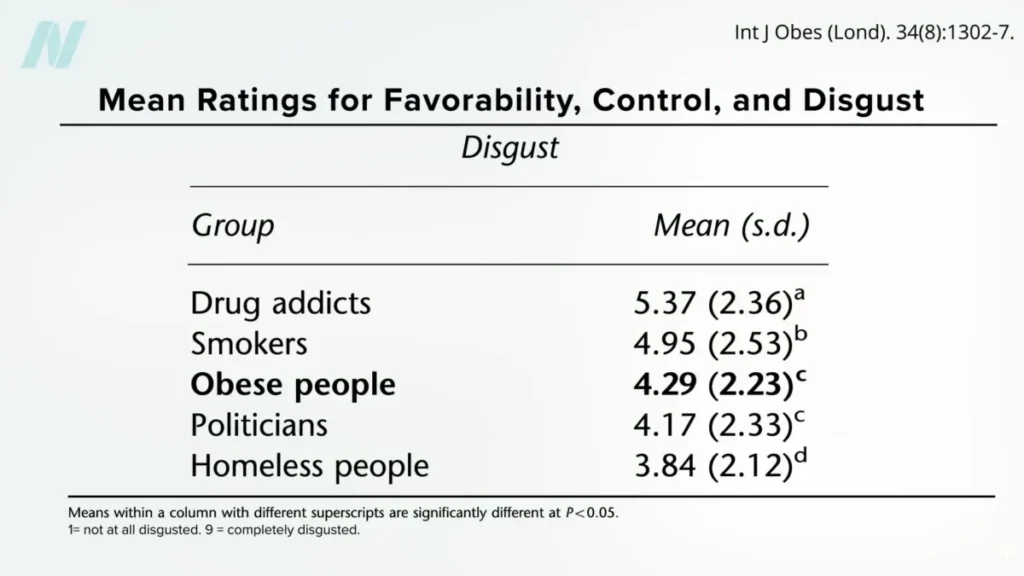
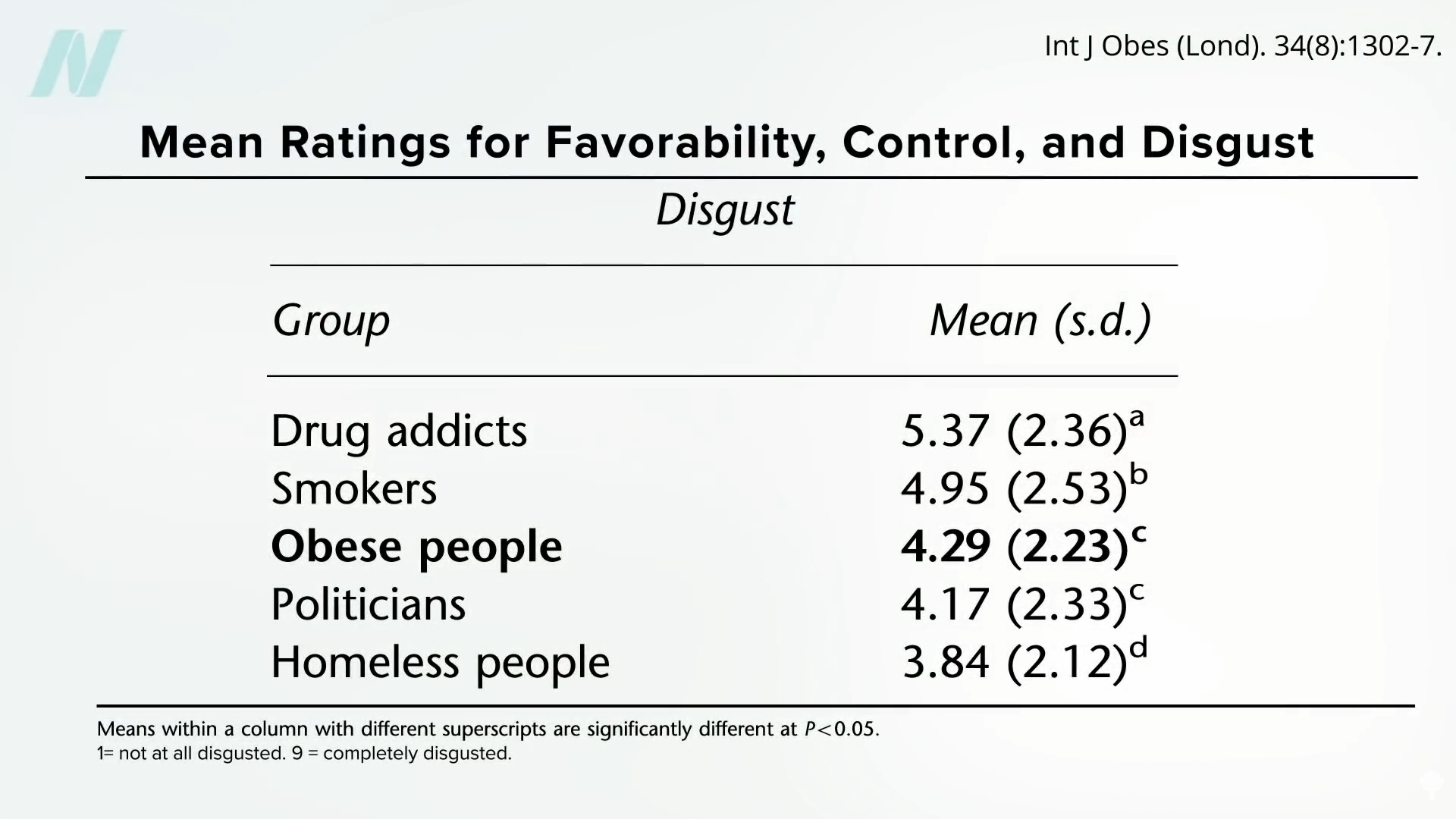
Beyond individual experiences, surveys offer a stark glimpse into societal attitudes towards individuals with obesity. In a comparative study of sixteen stigmatized social groups, including people experiencing homelessness, the results were sobering. "Only drug addicts and smokers were seen as more disgusting than obese people," a finding that speaks volumes about the depth of negative public sentiment. This visceral reaction places individuals with obesity in a category of extreme social disapproval, often implying a lack of self-control or moral failing—perceptions rarely applied with such intensity to other marginalized groups. Interestingly, the researchers also noted an effective tie: "obese people were rated just as disgusting as politicians," a sardonic observation that, while perhaps intended humorously, further underscores the low regard in which this group is held.
The roots of this prejudice are disturbingly deep, manifesting at an incredibly young age. Weight stigma starts surprisingly early in childhood development. Children as young as three years old already associate negative stereotypes with overweight peers, describing them with terms like "mean," "stupid," "lazy," and "ugly." As children age and their understanding of social hierarchies and norms develops, this negative language and perception only intensifies, revealing a learned prejudice that becomes more ingrained over time. This early indoctrination into weight bias highlights the urgent need for interventions that challenge these stereotypes from formative years.
A Worsening Trend: The Chronology of Stigma
The historical trajectory of weight bias paints a concerning picture of worsening societal attitudes. A landmark study published in 1961 offered an early, powerful insight into childhood perceptions. Conducted in summer camps and schools across diverse social, cultural, and ethnic backgrounds in California, Montana, and New York, the study presented children with pictures of various peers. These images included a child with crutches and a leg brace, a child in a wheelchair, a child missing a hand, a facially disfigured child, and an obese child. Participants were asked to rank who they liked best. Across every demographic tested, there was "remarkable uniformity": the obese child consistently came in dead last, revealing a profound and widespread aversion even in the mid-20th century.
Fast forward four decades, and the situation had not improved; it had deteriorated. In 2003, researchers published a 40-year follow-up study, repeating the original experiment. The title of their findings, "Getting Worse: The Stigmatization of Obese Children," chillingly encapsulated the outcome. The obese child was liked even less in the follow-up study than in 1961, indicating a regression in societal acceptance rather than progress. This alarming trend in childhood perceptions mirrors broader shifts throughout society, with national surveys recording a nearly 70% jump in perceived weight discrimination since the mid-1990s. This suggests that despite increased awareness of various forms of discrimination, weight bias has not only persisted but has intensified, becoming a more pronounced challenge in contemporary society.
Bias in Education and Family: Early Seeds of Discrimination
The institutional and familial environments, which should ideally be havens of support and equity, are not immune to the insidious effects of weight bias. In educational settings, the attitudes of teachers and school staff can significantly impact students. A survey revealed that more than a quarter of educators felt that becoming obese is "one of the worst things that could happen to a person." Such deeply ingrained negative perceptions among those entrusted with shaping young minds can translate into subtle or overt biases that affect how students are treated, perceived, and supported academically and socially. This can lead to a less inclusive and nurturing environment for overweight students, potentially impacting their self-esteem, academic performance, and overall well-being.
Even within the family unit, the foundational pillar of support, weight bias can manifest with devastating consequences. Studies have shown that parents can exhibit bias, for instance, providing less financial and emotional support for college for their overweight daughters compared to their thinner siblings. This form of discrimination, coming from those who should offer unconditional love and encouragement, can be particularly damaging. As two prominent obesity researchers aptly commented, "It is strong prejudice indeed when parents discriminate against their own children." This highlights the profound societal penetration of weight stigma, capable of fracturing the most fundamental human bonds and denying opportunities to those who need them most.
The Healthcare System: A Critical Frontline Marred by Bias
Perhaps nowhere are the implications of weight bias more critical than within the healthcare system, where it can directly impede access to care, compromise the quality of treatment, and ultimately, harm patient health. The notion that medical professionals, sworn to "do no harm," might harbor such biases is deeply troubling.
One representative national survey uncovered that over half of physicians "viewed obese patients as awkward, unattractive, ugly, and noncompliant." This dehumanizing perception undermines the very foundation of patient-centered care. The problem extends to other crucial healthcare providers; about a quarter of nurses agreed or strongly agreed with the statement: "Caring for an obese patient usually repulses me." These attitudes, whether conscious or unconscious, create a hostile and unwelcoming environment for patients seeking help, often when they are at their most vulnerable.
This antagonism has serious, tangible health consequences, particularly for those who may need medical intervention the most. For example, obese women face a higher risk for developing cervical, endometrial, and ovarian cancers. Despite this increased risk, they are less likely to be screened for these conditions. Morbidly obese patients, in particular, have only about half the odds of receiving their recommended pelvic exams. This disparity is not solely due to patient avoidance, though fear of judgment and discomfort can certainly play a role. A significant part of the problem stems from healthcare providers themselves. The Sun Sentinel polled OB/GYN practices in Florida and found that as many as one in seven refused to see heavier women, with some setting arbitrary weight cut-offs for new patients as low as 200 pounds. This outright denial of care is a profound ethical breach, exacerbating health disparities and leaving a vulnerable population without essential medical services.
Even when obese patients are welcomed into a practice, the quality of care can be compromised. Physicians randomized to receive a medical chart of a migraine patient, who was presented as either average weight, overweight, or obese, indicated they would allocate approximately 28% less of their time to the obese patient. This reduced time translates into less thorough examinations, fewer opportunities for patient education, and a rushed clinical interaction. Furthermore, observed doctor’s visits have revealed that physicians tend to build "less emotional rapport with overweight and obese patients." The lack of empathy and connection can make patients feel unheard, disrespected, and less likely to adhere to treatment plans, creating a vicious cycle of poor health outcomes.
Disturbingly, this bias is not confined to general practitioners; even obesity specialists, professionals dedicated to treating weight-related conditions, profess increasingly explicit anti-fat attitudes. Surveys conducted between 2001 and 2013 showed a worsening trend, with obesity specialists describing "fat people as significantly more lazy…stupid…and worthless…compared to thin people." This deep-seated prejudice, even among those specializing in the field, reveals a systemic problem that permeates all levels of medical care. The medical literature itself, a supposed bastion of objective science, has historically contained dehumanizing language, with examples like a quote from the Annals of Internal Medicine: "Obesity is an aesthetic crime: it is ugly." Such rhetoric only reinforces stigma and undermines the therapeutic relationship.
The "good news," if it can be called that, is that doctors appear largely capable of hiding their disdain. A study aptly titled "Obese Patients Overestimate Physicians’ Attitudes of Respect" found that despite the negative attitudes doctors harbored toward their obese patients, the patients themselves often expressed satisfaction with their providers. While this might seem positive on the surface, the researchers concluded: "While physicians may be successfully playing the part, the lack of true respect suggests…the authenticity of the patient-physician relationship should be questioned." This revelation is profoundly concerning, as a genuine, trusting relationship is paramount to effective healthcare. The superficial display of professionalism, while perhaps avoiding overt conflict, prevents true therapeutic engagement and can leave patients with unresolved health issues and emotional distress.
Profound Implications and the Call for Systemic Change
The implications of such widespread and deeply ingrained weight bias are far-reaching, impacting not only physical health but also mental well-being, social integration, and economic opportunity. Individuals subjected to weight stigma often experience chronic stress, anxiety, depression, and low self-esteem. They may internalize negative stereotypes, leading to self-blame and further isolation. The constant threat of discrimination can lead to avoidance of social situations, exercise, and, critically, healthcare, thereby perpetuating a cycle of poor health. Eating disorders, body image issues, and mental health crises are frequently exacerbated by the relentless societal pressure and prejudice associated with weight.
Economically, weight bias contributes to significant disparities. Discrimination in employment leads to fewer job opportunities, lower wages, and slower career progression for overweight individuals. This not only impacts personal financial stability but also represents a loss of talent and productivity for the broader economy. Socially, the constant judgment and stereotyping can lead to marginalization, social exclusion, and a diminished quality of life.
Addressing weight bias requires a multi-faceted approach that goes beyond individual awareness to encompass systemic change. Education campaigns are crucial to challenge stereotypes and promote empathy from an early age. Healthcare institutions must implement robust anti-discrimination policies, comprehensive training for all staff on weight-inclusive care, and accountability measures to ensure equitable treatment. Medical curricula need to be revised to educate future professionals about the pervasive nature and harm of weight bias, focusing on objective, evidence-based care rather than subjective judgments.
Policymakers have a critical role to play in enacting legislation that protects individuals from weight discrimination, similar to protections against other forms of bias. Just as we strive for equity based on race, gender, religion, and sexual orientation, the fight against weight bias demands similar legal and societal frameworks. The focus should shift from shaming individuals for their weight to creating environments that support health and well-being for all body types, recognizing the complex interplay of genetics, environment, socio-economic factors, and individual choices in body weight.
The pervasive nature of weight bias, its early onset, its worsening trend, and its damaging impact across crucial sectors like healthcare, demand urgent attention. It is a form of prejudice that undermines human dignity, compromises health, and perpetuates inequality. Recognizing weight bias as a serious societal problem is the first step towards fostering a more inclusive, empathetic, and equitable world for everyone, regardless of their body size.
Doctor’s Note:
This article is the first in a two-part series exploring the multifaceted issue of weight bias. The next blog, The Burden of Weight Bias, will delve deeper into the profound consequences and personal toll of this pervasive discrimination. Both articles are drawn from my comprehensive book, How Not to Diet, which explores evidence-based approaches to health and well-being.