The Art of the Paleo Pancake: Achieving the Perfect Texture Without Grains
For those navigating the complexities of a Paleo or gluten-free lifestyle, the breakfast table often feels like a series of compromises. The search for a pancake that mirrors the airy, golden-brown, and tender qualities of traditional wheat-based flapjacks has long been the "holy grail" of alternative baking. However, a new approach utilizing a precise synergy of almond flour and tapioca starch is changing the narrative, proving that restrictive diets need not result in lackluster morning meals.
Main Facts: The Science of Grain-Free Leavening
The fundamental challenge in Paleo baking lies in the absence of gluten, the protein structure that provides wheat-based pancakes their signature "lift" and chew. Without it, many grain-free pancakes end up dense, overly nutty, or prone to crumbling.
The secret to this particular recipe lies in the specific ratio of finely ground almond flour to tapioca starch. Almond flour provides a high-protein, healthy-fat foundation, while the tapioca starch acts as a binding agent that mimics the elasticity of gluten. When combined with a custom-mixed Paleo baking powder—a blend of baking soda, cream of tartar, and a touch of starch—the result is a batter that holds its structure, puffs beautifully on a hot surface, and retains a moist, delicate crumb.
Unlike many alternative flours that impart a distinct, often overpowering taste, this almond-tapioca combination provides a neutral, slightly sweet base that serves as a perfect canvas for maple syrup, fresh berries, or savory accompaniments.

Chronology: A Step-by-Step Culinary Blueprint
Achieving professional results at home requires an adherence to specific techniques, particularly when dealing with the high-fat content of almond flour.
1. The Dry Base Preparation
The process begins with the dry ingredients: finely ground almond flour, tapioca starch, baking powder, and a pinch of salt. It is imperative to whisk these thoroughly. Because almond flour is oil-rich, it is prone to clumping; sifting the flour or whisking vigorously ensures that no "bitter pockets" of leavening agents remain, which can ruin the flavor profile.
2. Integrating the Wet Ingredients
Once the dry mixture is uniform, the wet components—milk, melted coconut oil, eggs, and honey—are incorporated. The resulting batter will initially resemble the consistency of heavy cream.
3. The Crucial Rest Period
This is the step most amateur bakers overlook. The batter must rest for at least 10 minutes. During this time, the almond flour and tapioca starch absorb the moisture, allowing the batter to thicken into a pourable but stable state. Skipping this step leads to thin, runny pancakes that lack the necessary height.

4. Thermal Management
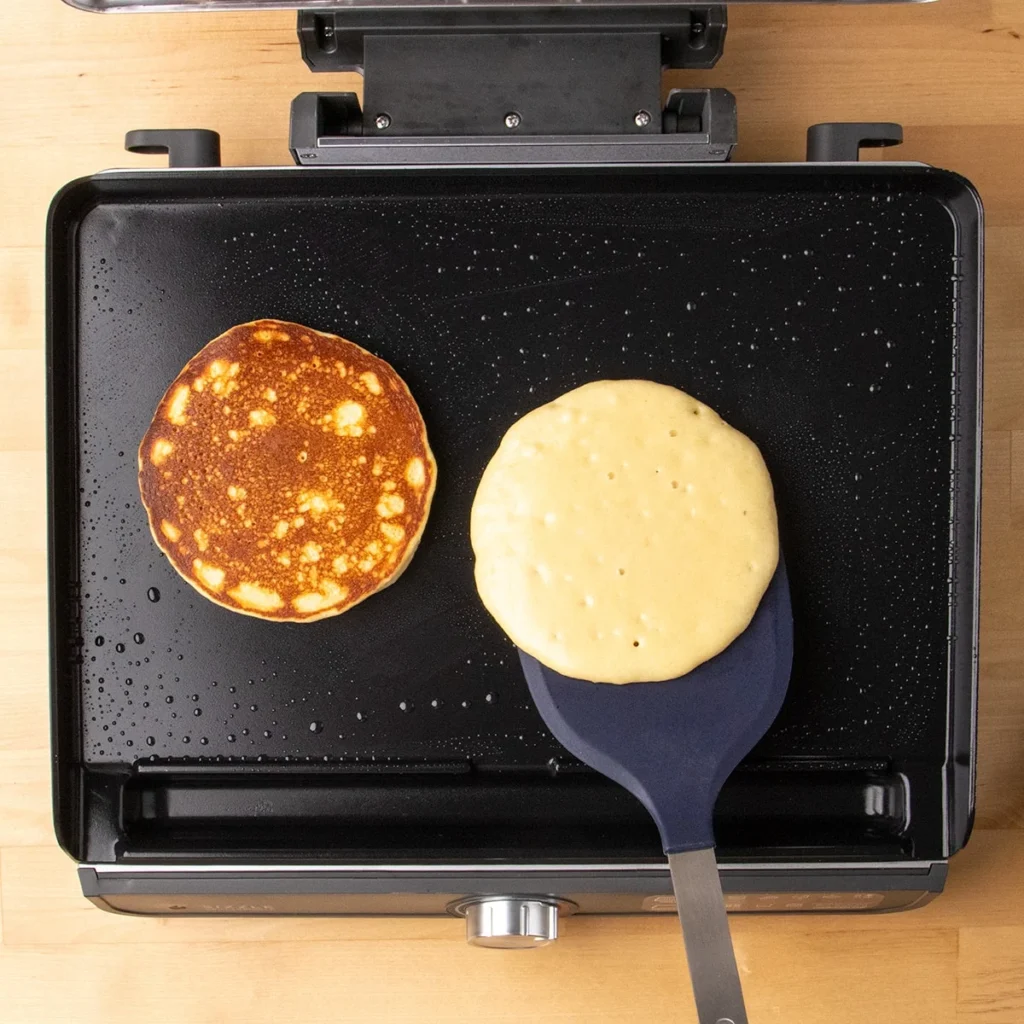
Temperature control is the final hurdle. Almond flour has a lower smoke point and a higher fat content than wheat flour, meaning it burns quickly. An electric griddle set between 325°F and 350°F is ideal. If using a cast-iron skillet, medium heat is the maximum threshold. Greasing the surface is essential, even on non-stick pans, to ensure an even, caramelized golden-brown crust.
5. The Flip
Patience is rewarded here. The pancakes are ready to flip only when large bubbles form on the surface and the edges appear set and matte. A wide, thin spatula is required to execute a clean turn, cooking the second side for another 30 to 60 seconds.
Supporting Data: Nutritional Density and Storage
From a nutritional standpoint, these pancakes offer a superior profile to their grain-heavy counterparts. A single pancake contains approximately 215 calories, with 7 grams of protein and 15 grams of healthy fats. Unlike traditional pancakes that lead to a rapid insulin spike, the protein and fat content in this almond-based version provides sustained energy, preventing the mid-morning "crash" often associated with refined carbohydrates.
Furthermore, these pancakes are highly conducive to a "batch cooking" lifestyle. Because they freeze exceptionally well, they are an ideal solution for busy households. Once cooled, they can be stacked in freezer-safe parchment and stored for weeks. When the craving strikes, they can be resurrected in a toaster oven at 300°F for two minutes, returning to their original, fluffy texture.

Official Perspectives: Addressing Common Pitfalls
Expert bakers and nutritionists often point to three common errors that lead to failure when attempting this recipe:
- Measuring by Volume vs. Weight: Baking is a science. Flour density varies wildly depending on how it is packed into a measuring cup. Using a digital kitchen scale is the only way to ensure the ratio of fat-to-binder remains accurate.
- The "Almond Meal" Trap: There is a significant distinction between almond flour and almond meal. The latter includes the skins of the almonds, resulting in a gritty, coarse texture that prevents the batter from ever becoming truly smooth. Using high-quality, blanched, finely ground almond flour is non-negotiable for the desired "traditional" texture.
- The Leavening Dilemma: Conventional baking powder often contains cornstarch, which may not align with strict Paleo guidelines. The recommendation is to mix a custom blend: 1/2 teaspoon baking soda, 1 teaspoon cream of tartar, and 1/4 teaspoon arrowroot or tapioca starch. This ensures the leavening agent is both effective and compliant.
Implications: The Evolution of Gluten-Free Cooking
The implications of this recipe extend far beyond a single breakfast item. It represents a broader shift in the culinary world toward "nutrient-dense convenience." For years, the gluten-free and Paleo communities were forced to accept sub-par substitutes that relied on expensive, processed starches and additives.
By utilizing whole-food ingredients—almonds, eggs, and coconut—these pancakes demonstrate that the gap between "healthy" and "indulgent" is closing. It validates the idea that dietary restrictions do not require the sacrifice of sensory satisfaction.
For the home cook, the ability to replicate a classic comfort food like the pancake using ancestral, nutrient-dense ingredients is empowering. It removes the social friction of dietary restrictions, allowing individuals to serve a breakfast that everyone at the table can enjoy, regardless of their health goals. As the availability of high-quality almond flour and tapioca starch continues to grow, the standard for what we expect from grain-free baking will only continue to rise.

Whether you are a strict adherent to the Paleo diet or simply someone looking to reduce their refined carbohydrate intake, mastering the Paleo pancake is a worthwhile endeavor. It is a lesson in patience, precision, and the transformative power of the right ingredients. By understanding the chemical interactions of your pantry staples, you can turn a humble breakfast into a sophisticated, satisfying, and health-conscious start to your day.