The Art of the Perfect Crunch: Redefining Strawberry Granola for the Home Kitchen
In the world of breakfast staples, few items offer the versatility and comfort of a well-made granola. Yet, the commercial market is often saturated with overly sweetened, artificially flavored varieties that lack the nuance of real fruit. A new culinary approach, championed by expert gluten-free recipe developer Nicole Hunn, is changing the landscape of morning nutrition. By moving away from mere freeze-dried toppings and instead utilizing a concentrated strawberry syrup reduction, this innovative recipe produces a granola that is deeply infused with authentic berry flavor and maintains a superior, crisp texture.
Main Facts: A Technical Approach to Granola
The core innovation in this recipe lies in the integration of a homemade strawberry puree, which is reduced into a thick, jammy syrup. Unlike traditional recipes that rely on the inclusion of dried fruit during the baking process—which often leads to chewy, leathery textures—this method treats the strawberry element as a foundational flavor component.
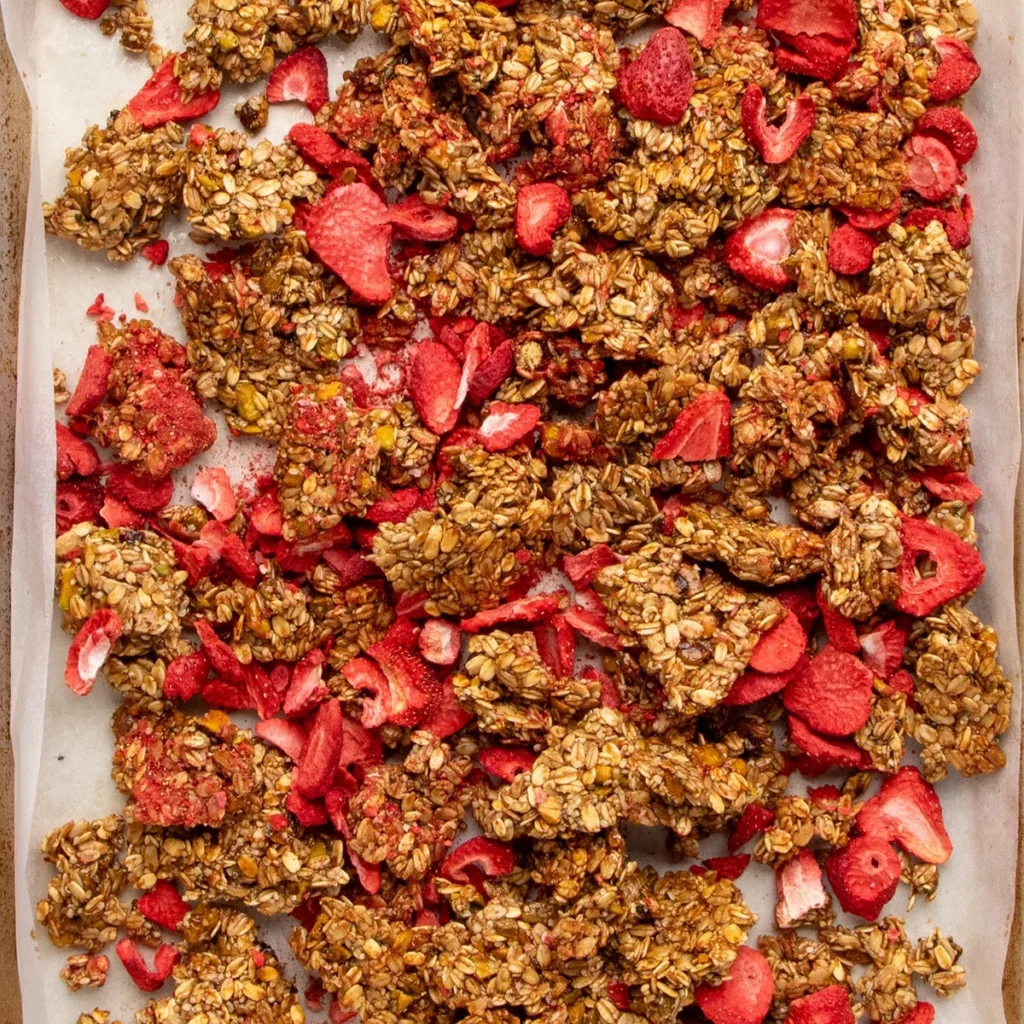
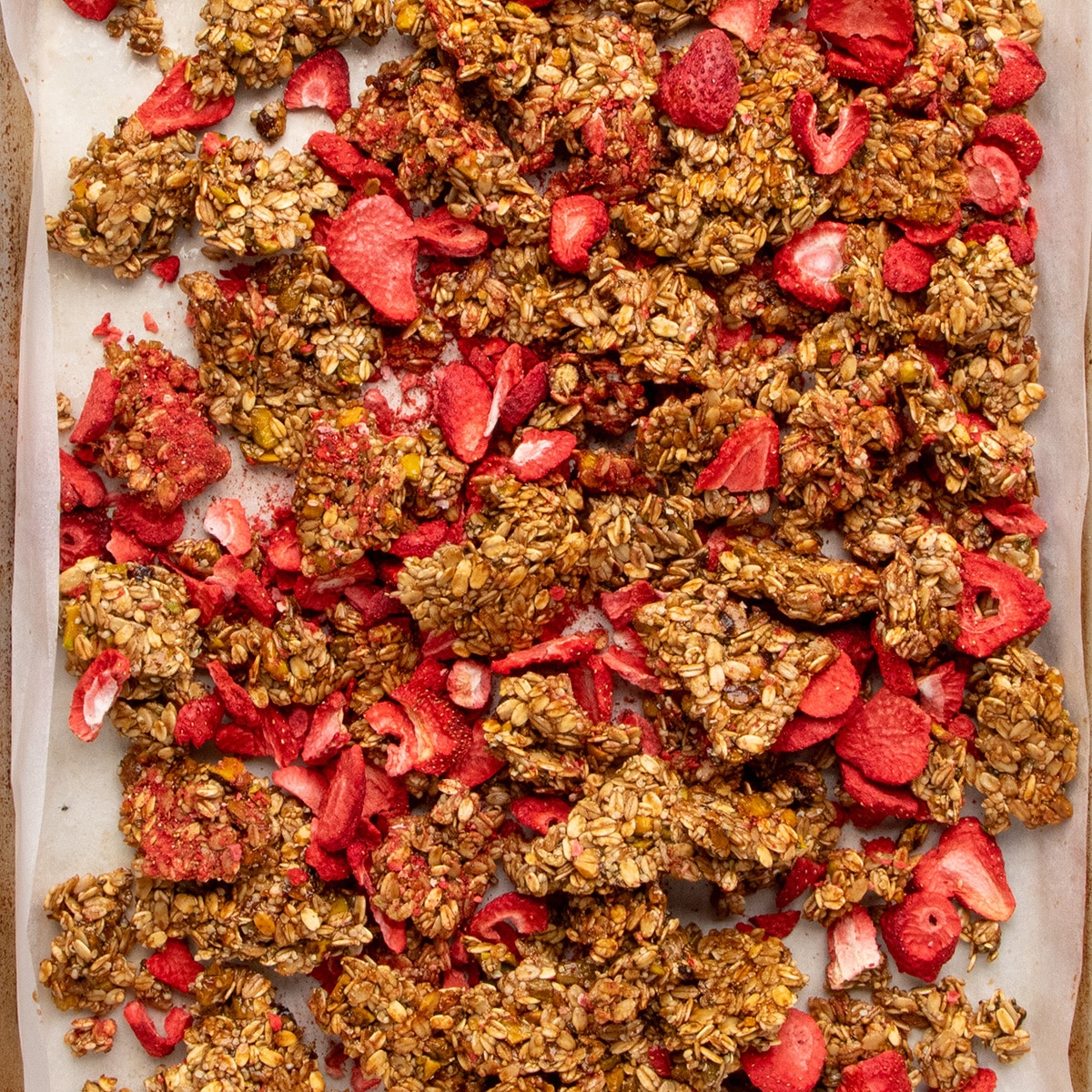
By cooking down frozen strawberries with maple syrup, salt, and water, Hunn creates a concentrated base that coats the dry ingredients—oats, pistachios, and seeds—before they even hit the oven. This ensures that every bite carries the essence of the fruit. The final touch, added only after the cooling process is complete, involves freeze-dried strawberries. These provide a contrasting, delicate crunch that keeps the overall dish bright and texturally complex. Because the recipe is naturally gluten-free, dairy-free, and egg-free, it serves as a sophisticated solution for families managing multiple dietary restrictions without sacrificing the quality of the final product.
Chronology: The Step-by-Step Culinary Process
Achieving the perfect, shelf-stable cluster requires a precise sequence of events. The following timeline outlines the professional technique required for success.
1. The Puree Foundation
The process begins on the stovetop. Frozen strawberries are simmered with water, salt, and maple syrup until they reach a soft, macerated consistency. This mixture is then blended—ideally with an immersion blender to ensure safety and ease—and optionally passed through a fine-mesh sieve to remove seeds for a smoother profile.
2. Developing the Syrup
The "wet" ingredients—comprising the strawberry puree, honey, maple syrup, coconut sugar, vinegar, and coconut oil—are brought to a medium boil. The goal is to reduce this mixture by approximately 25%. As moisture evaporates, the sugars caramelize, resulting in a dark, thick, and highly aromatic syrup that is ready to bind the dry components.

3. The Mixing and Initial Bake
The syrup is poured directly over the dry blend of oats, chopped pistachios, and hemp seeds. Thorough coating is essential for consistency. The mixture is spread across a parchment-lined sheet pan in a thin, uniform layer. A brief, 10-minute bake at 325°F kicks off the process, followed by a mandatory stir and another 10-minute stint in the oven to ensure even heat distribution.
4. The Dehydration Phase
The secret to the "weeks-long" crunch lies in a low-temperature finish. By dropping the oven temperature to 175°F for an additional hour, the oven acts as a gentle dehydrator. This step is critical, particularly in humid climates, as it wicks away residual moisture that would otherwise cause the granola to lose its snap.
5. The Cooling and Finishing
The granola must remain completely undisturbed while cooling to room temperature. Only after the clusters are entirely cool are the freeze-dried strawberries folded in. Adding them while warm would introduce moisture and soften the berries, ruining their crisp integrity.

Supporting Data and Nutritional Profile
The recipe is designed for both flavor and nutritional density. A single one-cup serving provides approximately 767 calories, derived from a balance of complex carbohydrates (99g) and healthy fats (35g) from the nuts and seeds. The inclusion of pistachios and hemp seeds contributes to a significant protein count (19g) and fiber content (10g), making this a substantial breakfast option.
| Nutrient | Amount per Serving |
|---|---|
| Calories | 767 kcal |
| Protein | 19g |
| Carbohydrates | 99g |
| Fiber | 10g |
| Fat | 35g |
| Vitamin C | 166mg |
The high Vitamin C content is a direct result of the concentration of real strawberries, distinguishing this recipe from store-bought alternatives that rely on synthetic additives for flavor enhancement.
Expert Insights and Troubleshooting
Professional kitchen techniques often make the difference between a soggy mess and a gourmet product. Nicole Hunn emphasizes three critical "Pro Tips" for the home cook:

- The Dehydration Necessity: Do not bypass the final hour of low-temperature baking. While it requires patience, it is the only way to ensure the granola remains crisp for two weeks or longer.
- The Value of Dust: When handling freeze-dried strawberries, do not discard the "dust" at the bottom of the bag. These pulverized berry particles act as a natural seasoning, clinging to the granola clusters and intensifying both the color and the tart flavor.
- Safety First: When blending the strawberry puree, avoid using a standard blender if the liquid is boiling hot. The expansion of steam can create significant pressure, potentially displacing the blender lid. An immersion blender is the preferred tool for safety and efficiency.
Implications for the Gluten-Free Community
The broader implication of this recipe is the movement toward "gastronomic parity" in the gluten-free world. Historically, individuals on gluten-free diets were forced to accept "good enough" substitutes. However, the rise of artisanal, home-based culinary development—exemplified by platforms like Gluten Free on a Shoestring—proves that dietary restrictions do not necessitate a compromise in texture or flavor.
By using high-quality ingredients like rolled buckwheat as a potential oat substitute or sunflower seeds for nut-free households, this recipe offers a blueprint for inclusivity. It demonstrates that the key to great cooking—whether for the health-conscious, the gluten-intolerant, or the refined palate—is not the removal of ingredients, but the mastery of technique.
Storage and Preservation
To maintain the integrity of the granola, storage is paramount. The author recommends storing the final product in nonporous, airtight glass containers. Glass prevents the absorption of ambient moisture, which is the primary antagonist of crisp granola. While the recipe can be frozen for up to three months, the texture of the freeze-dried strawberries may degrade. If the granola loses its crunch after extended storage, a brief "refresh" in the oven at 175°F for 30–45 minutes can successfully restore its original quality.

In summary, this strawberry granola recipe serves as a masterclass in flavor extraction. By shifting the focus from simple ingredient assembly to a multi-stage process of reduction and dehydration, the home baker can produce a product that rivals the quality of high-end, boutique breakfast brands. It is a testament to the fact that with the right approach, gluten-free dining can be as indulgent and satisfying as any traditional culinary experience.