The Unseen Pitfall: How "Healthy Options" Can Lead Us to Unhealthier Choices
Main Facts
In a counter-intuitive twist of human psychology, the introduction of healthy food options in restaurants and grocery stores, often lauded as a step towards better public health, can paradoxically drive consumers to make worse dietary choices. This perplexing phenomenon challenges conventional wisdom surrounding health initiatives, including the widespread mandate for calorie labeling, which has been shown to have negligible impact on consumer behavior. Far from guiding individuals towards moderation, the mere presence of a salad or a veggie burger on a menu can trigger subconscious cognitive biases, leading people to indulge more, not less, in high-calorie, less nutritious fare.
This discovery highlights a critical flaw in current public health strategies that rely solely on providing information or superficial healthy alternatives. Instead of empowering healthier decisions, these well-intentioned efforts can inadvertently activate psychological loopholes such such as "self-licensing," "vicarious goal fulfillment," and the "health halo effect," ultimately undermining personal health goals and potentially exacerbating the very issues they aim to combat.
Chronology: The Unfolding Story of Calorie Labeling and Its Limited Impact
The journey towards transparent food labeling in chain restaurants gained significant momentum in the mid-2000s, driven by growing concerns over rising obesity rates and the public’s right to informed choices. New York City emerged as a pioneer, implementing a calorie labeling mandate in 2008. This local initiative was seen by many as a crucial step, providing consumers with essential nutritional information at the point of purchase. The logic was straightforward: armed with calorie counts, individuals would naturally opt for lower-calorie meals, thereby contributing to better health outcomes.
However, early studies following New York City’s mandate painted a less optimistic picture. Research, including one study published in 2011, found that the calorie labels had "no overall effect on consumer behavior." This unexpected outcome suggested that simply providing information was insufficient to alter deeply ingrained eating habits or combat the powerful allure of indulgent foods.
Despite these early indicators of limited effectiveness, the movement for national calorie labeling continued to gather steam. In 2012, McDonald’s, a global fast-food giant, voluntarily began publishing calorie information nationally. This move, while seemingly proactive and health-conscious, was likely a strategic corporate decision. By adopting labeling ahead of a broader federal mandate, McDonald’s could position itself as a responsible brand, demonstrating "concern for consumers’ well-being" without necessarily disrupting sales of its core, often high-calorie, offerings like the Big Mac. The ease with which such regulations were passed by some chains, and the lack of fierce industry resistance, retrospectively hints at the industry’s quiet understanding that these labels might not significantly impact their bottom line.
The culmination of these efforts arrived in 2017 when menu labeling for calorie counts became federally mandated in national chain restaurants across the United States. This mandate, enacted with considerable fanfare, was predicated on the belief that universal access to caloric information would empower consumers to make healthier food choices when dining out. Yet, just as earlier research had suggested, the broad impact proved minimal. Subsequent studies, including one published shortly after the national rollout, concluded that calorie labels were largely ineffective, leading to an average reduction of only about eight insignificant calories per meal. This marginal impact underscored a fundamental disconnect between the policy’s intent and its real-world efficacy, pointing towards deeper psychological drivers of food choice that mere information could not overcome.
Supporting Data: Unpacking the Psychological Mechanisms
The failure of calorie labeling and the paradoxical effect of healthy options can be attributed to several fascinating, yet detrimental, glitches in human psychology. These cognitive biases operate largely unconsciously, subtly steering our decisions in directions contrary to our stated health goals.
Vicarious Goal Fulfillment and Self-Licensing: The "Next Time" Trap
One of the most compelling explanations for this paradox lies in the concepts of "vicarious goal fulfillment" and "self-licensing." Researchers describe "vicarious goal fulfillment" as the psychological phenomenon where the mere presence of a healthy option leads individuals to believe they have vicariously achieved a health goal, thereby granting themselves permission to indulge. This isn’t about actively choosing the healthy item; it’s about the subconscious acknowledgement of its availability.

A series of experiments vividly illustrates this effect:
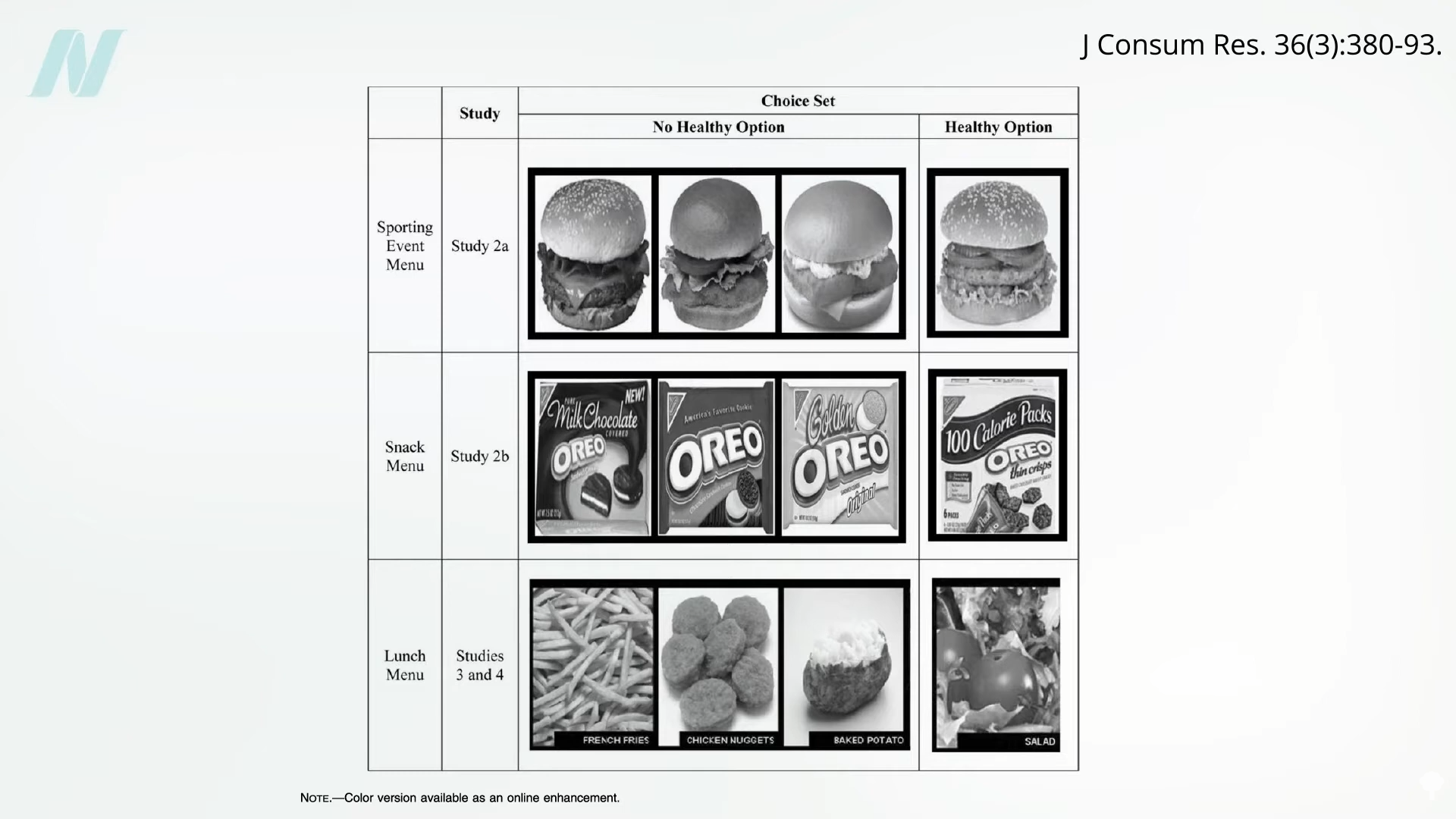
- The Side Dish Dilemma: Imagine a scenario where diners are offered a choice of side dishes: indulgent French fries or a more neutral baked potato. In this limited choice, approximately 10% of people will opt for the fries. However, when a third, even healthier option – a side salad – is introduced, the percentage of people choosing fries doesn’t decrease; it dramatically triples to 33%. The presence of the salad, intended to encourage healthier eating, inexplicably pushed a significant portion of diners towards the unhealthiest option.
- The Main Course Conundrum: A similar pattern emerged with main dishes. When presented with a bacon cheeseburger, a chicken sandwich, or a fish sandwich (a "No Healthy Option" scenario), 17% of participants chose the cheeseburger. But when the fish sandwich was swapped out for a veggie burger, the preference for the bacon cheeseburger doubled to 37%. The introduction of a clearly healthy alternative licensed a greater indulgence in the least healthy choice.
The underlying mechanism here is "self-licensing." This psychological glitch causes individuals to unwittingly justify actions that diverge from their goals after they have just done (or even considered doing) something that aligns with those goals. It’s the mental calculus that says, "I’ve been good, so I deserve a treat," or "I’ll eat healthy tomorrow, so today I can splurge."
This phenomenon extends beyond food choices:
- The Vitamin C and Smoking Study: Smokers given "vitamin C" supplements (which were actually placebo sugar pills) subsequently smoked nearly twice as many cigarettes as those who believed they were taking "placebo" pills. Subconsciously, the act of taking a purported health supplement provided a license to engage in unhealthy behavior.
- Dietary Supplements and Exercise/Diet: Participants who believed they were taking dietary supplements (again, placebos) not only expressed less desire to exercise but also walked approximately a third less. They were also more likely to choose a buffet over a "healthy, organic meal." A seminal study, "The Liberating Effect of Weight Loss Supplements on Dietary Control," directly tested this. Subjects believing they were taking a weight-loss supplement (a placebo) ate more food at a buffet, chose less healthy items, consumed about 30% more candy in a "taste test," and ordered more sugary drinks. The investigators concluded: "people who rely on dietary supplements for health protection may pay a hidden price: the curse of licensed self-indulgence."
Crucially, these studies reveal that it’s not just actual progress towards a goal that rationalizes indulgence; even considering making progress can have a similar licensing effect. The presence of a salad or veggie burger is enough to trigger the "I’ll choose that next time" thought, thereby giving permission for an unhealthy choice now. And, alarmingly, this often pushes people towards the unhealthiest available option, rather than a middle-ground.
The "What the Hell Effect": Spiraling Indulgence
Complementing self-licensing is another illogical quirk of human psychology, often referred to as the "what the hell effect." This phenomenon explains why a single dietary transgression can lead to a complete abandonment of self-control. Once an individual has strayed from their health goals – perhaps by choosing fries despite the salad option – a feeling of defeat or "already broken" resolve sets in. The thought process becomes: "Well, I’ve already messed up, so what the hell, why not go all the way?"
This effect was strikingly demonstrated in an experiment involving Oreos:
- In a "No Healthy Option" scenario offering chocolate-covered Oreos, regular Oreos, or golden Oreos, researchers observed participants’ choices.
- When a "lower-calorie" Oreo option was introduced, it surprisingly doubled the likelihood that participants would choose the most indulgent, chocolate-covered variety. The initial "slip" or the perception of having a "better" option available for next time created a license to fully embrace the immediate gratification of the most decadent choice.
The "what the hell effect" explains why, once a decision to indulge has been made (even if rationalized by vicarious goal fulfillment), the individual might as well maximize that indulgence, opting for the most extreme unhealthy choice available.
The Health Halo Effect: Perceptual Distortions
Beyond self-licensing and the "what the hell effect," our perceptions of food can be significantly warped by the "health halo effect." This bias occurs when the presence of healthy elements makes an entire meal or food item seem healthier than it actually is, leading people to underestimate its calorie content or overall unhealthiness.
Consider these examples:
- The Burger and Celery Illusion: When weight-conscious individuals were shown a burger alone, they estimated its calorie count at an average of 734 calories. However, when shown the exact same burger accompanied by three celery sticks, their estimate dropped significantly to 619 calories. Despite knowing that celery has calories, the mere visual juxtaposition made the burger appear less caloric and healthier.
- Subtle Additions, Major Perceptual Shifts: This effect extends to various combinations. Adding an apple to a bacon-and-cheese waffle sandwich, a side salad to beef chili, or some carrots next to a cheesesteak consistently led people to estimate about a hundred fewer calories for the overall meal. The healthy components didn’t just add nutrition; they perceptually subtracted calories from the unhealthy main dish.
- Brand Perception and Indulgence: The health halo can also influence broader meal choices. People are more likely to order a dessert and more sugary drinks with a "healthier" sub from Subway than with a Big Mac from McDonald’s. This occurs even if the Subway sub in question (e.g., filled with ham, salami, and pepperoni) might contain 50% more calories than the Big Mac. The perception of Subway as a "healthier" brand creates a halo effect that justifies additional indulgences.
- Textual Influence: Even a simple textual reference can create a health halo. Showing people a picture of a Big Mac led to an average calorie estimate of 646. But when the text "For your health, eat at least five fruits and vegetables per day" was added to the advertisement, the same burger in the same ad was estimated to have only 503 calories. The mere suggestion of health, even if unrelated to the specific item, can significantly alter perception.
The health halo effect demonstrates how easily our minds can be tricked into believing we are making better choices when faced with even a superficial nod to health. This psychological trick allows companies to promote salads and fruit, garnering "accolades" and bolstering consumer loyalty, all without genuinely encouraging healthier eating habits or diminishing the appeal of their high-profit, less healthy items.
Official Responses and Corporate Strategies
The insights gleaned from these psychological studies paint a complex picture of the relationship between public health initiatives and corporate responses. While the stated goal of calorie labeling and the introduction of healthy options is to empower consumers and improve public health, the actual outcomes often fall short, and sometimes even backfire.
From a corporate perspective, particularly within the competitive fast-food and restaurant industries, the adoption of "healthy options" and calorie labeling can be seen as a strategic response to evolving consumer demands and regulatory pressures. When McDonald’s voluntarily began publishing calorie information or announced plans to add seasonal produce, these actions were undoubtedly presented as commitments to public well-being. However, the research suggests that these moves also served other, perhaps more cynical, corporate objectives.
- Brand Image Enhancement: Introducing salads or displaying calorie counts can significantly boost a restaurant’s perception as a socially responsible and health-conscious brand. This positive image can attract a wider customer base, including those who are health-aware, without necessarily requiring these customers to actually choose the healthier options. The "health halo" extends to the brand itself.
- Regulatory Compliance with Minimal Impact: The industry’s relatively muted resistance to calorie labeling mandates, especially after initial studies showed their ineffectiveness, suggests an understanding that these regulations would not significantly curb sales of popular, high-margin indulgent items. Complying with mandates allows companies to avoid regulatory penalties and negative publicity while maintaining their core business model.
- Exploiting Psychological Biases: Unbeknownst to the general public, corporations may inadvertently (or perhaps knowingly) benefit from the psychological biases discussed. If the mere presence of a healthy option encourages greater indulgence in high-profit items, it creates a win-win for the business: they appear health-conscious and increase sales of their most lucrative products. This allows them to "bolster consumer loyalty without, ironically, helping their health."
Official responses from public health bodies often focus on the importance of "informed choice" and "transparency," advocating for policies like calorie labeling as essential tools. However, the evidence suggests that these policies, in isolation, are insufficient. There is a need for policymakers to understand the nuanced psychological landscape of consumer decision-making and to develop interventions that account for, rather than fall victim to, these biases. Simply providing information, while a foundational principle, does not automatically translate into behavioral change, especially when powerful subconscious mechanisms are at play.
Implications: Navigating the Complexities of Food Choice
The findings on vicarious goal fulfillment, self-licensing, the "what the hell effect," and the health halo effect have profound implications for individuals, public health policymakers, and the food industry alike.
For individuals, these insights are a stark reminder that making healthy choices is far more complex than simply knowing what’s good for you or having healthy options available. Our minds are prone to clever, often self-sabotaging, tricks.
- Awareness is Key: Understanding these psychological biases is the first step. Recognizing when you might be self-licensing ("I ate a salad, so I deserve this dessert") or falling for a health halo ("This burger has lettuce, so it’s probably fine") can help individuals consciously override these automatic responses.
- Environment Matters: The environment we find ourselves in profoundly shapes our choices. If simply seeing a healthy option can trigger indulgence, then actively curating our food environment (e.g., avoiding places with too many tempting unhealthy options, pre-planning meals, not buying "just one" forbidden treat) becomes crucial.
- Focus on Consistency, Not Perfection: The "what the hell effect" highlights the danger of an all-or-nothing mindset. A single slip-up doesn’t negate all previous efforts. Instead of giving up entirely, individuals can practice self-compassion and recommit to their goals with the next meal or decision.
For public health policymakers, these findings call for a re-evaluation of current strategies:
- Beyond Information: Policies like calorie labeling, while valuable for transparency, are clearly insufficient as standalone interventions for behavioral change. Future policies must move beyond simply providing information and delve into strategies that counteract psychological biases.
- Targeting the Environment: Instead of relying on individual willpower, policies could focus on creating environments where healthy choices are the default and unhealthy choices are less accessible or less appealing. This could involve stricter regulations on marketing of unhealthy foods, subsidizing healthy options, or fundamentally redesigning menus to nudge consumers towards better choices (e.g., making healthy sides the default).
- Educating on Biases: Public health campaigns could incorporate education about these psychological glitches, empowering individuals with the knowledge to recognize and resist them.
- Challenging the "Health Halo": Regulations might be needed to address how "healthy" imagery or language is used in marketing, especially when it creates misleading perceptions about the overall nutritional value of a meal.
For the food industry, the research presents an ethical dilemma. While the current system allows for profitable strategies that exploit these biases, a truly responsible approach would involve designing menus and marketing that genuinely support public health. This could mean:
- Redefining "Healthy Options": Instead of merely adding a single token healthy item, companies could rethink their entire menu architecture to make nutritious options more prominent, appealing, and genuinely integrated into meal combinations.
- Transparent Marketing: Moving away from marketing tactics that inadvertently create health halos or encourage self-licensing.
- Prioritizing Health Outcomes: Shifting focus from merely complying with regulations to actively contributing to better health for their consumers, which could, in the long run, foster deeper trust and loyalty.
Ultimately, understanding these intricate psychological processes is vital for anyone engaged in the pursuit of better health, whether as an individual, a policymaker, or a food industry leader. The illusion of choice, the subtle justifications of our minds, and the deceptive allure of a "health halo" remind us that true health empowerment requires not just information, but a profound awareness of the unseen forces shaping our decisions. As demonstrated by the related concept of "optimism bias"—the tendency to believe that bad things are less likely to happen to us than to others—humans are often overly confident in their ability to resist temptation. This research serves as a crucial antidote to such overconfidence, urging a more humble and strategically informed approach to fostering healthier eating habits in a world brimming with tempting, and often misleading, choices. The battle for better health is not just about what we eat, but how we think about what we eat.