The Evolution of Breakfast: Mastering the Perfect Paleo Pancake
For many health-conscious home cooks, the transition to a Paleo lifestyle often feels like a series of compromises. The breakfast table, traditionally anchored by wheat-based staples like pancakes, waffles, and muffins, often becomes a landscape of restriction. However, a growing movement in culinary science suggests that "giving up" gluten and grains doesn’t have to mean sacrificing the sensory joy of a warm, fluffy stack of pancakes.
The secret lies in the sophisticated chemistry of almond flour and tapioca starch—a pairing that, when executed with precision, creates a breakfast experience nearly indistinguishable from its conventional counterpart. This comprehensive guide explores the mechanics, preparation, and nutritional implications of the modern Paleo pancake.
Main Facts: The Anatomy of a Paleo Pancake
At its core, a Paleo pancake is defined by the absence of grains, dairy, and refined sugars. The challenge, historically, has been texture. Wheat flour provides gluten, a protein network that offers structure, elasticity, and "lift." Without it, Paleo alternatives often resulted in dense, gritty, or overly fragile disks.
The current gold standard in Paleo baking utilizes a specific ratio of blanched almond flour to tapioca starch. Almond flour—the primary ingredient—provides a healthy fat profile and high protein content, which contributes to satiety. Tapioca starch, derived from the cassava root, acts as the vital binder. It provides the "chew" and structural integrity that almond flour alone lacks, preventing the pancake from crumbling when flipped.

Chronology: The Step-by-Step Culinary Process
Achieving the perfect texture requires a methodical approach. The process is not merely about mixing ingredients; it is about managing hydration and heat.
Phase 1: Preparation and Dry Integration
The process begins with the dry ingredients: finely ground, blanched almond flour, tapioca starch, and a leavening agent. A crucial, often overlooked step is the whisking of these components. Because almond flour is dense with fats, it is prone to clumping. Thoroughly aerating the flour mixture ensures that the leavening agent is evenly distributed, preventing "bitter pockets" of baking powder that can ruin the flavor profile.
Phase 2: The Hydration Period
Once the wet ingredients—coconut milk, eggs, honey, and melted coconut oil—are incorporated, the batter appears thinner than traditional wheat batter, often resembling heavy cream. This is a critical juncture. The batter must rest for at least ten minutes. During this time, the tapioca starch and almond proteins absorb the moisture, causing the mixture to thicken. Skipping this rest period results in thin, runny pancakes that lack the desired fluffy profile.
Phase 3: Controlled Thermal Application
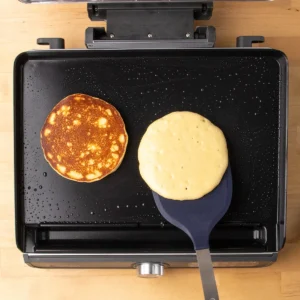
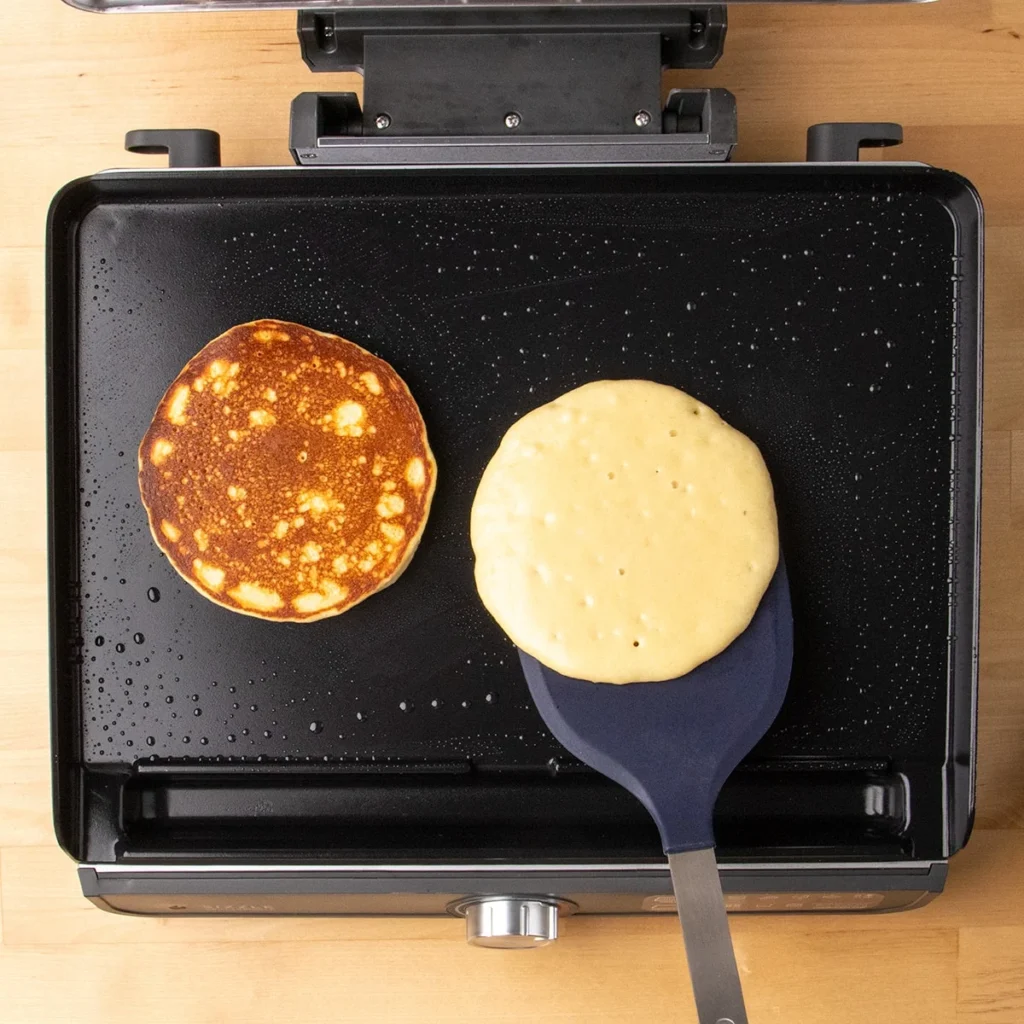
The high fat content of almond flour dictates the cooking environment. Unlike traditional batter, which can withstand high heat, almond flour is sensitive and prone to burning. An electric griddle set between 325°F and 350°F is the preferred tool. It provides a consistent, reliable surface temperature. Even when using non-stick surfaces, a light coating of oil is recommended to facilitate proper browning and crisp edges.

Phase 4: The Flip
The final hurdle is the flip. A professional-grade, wide non-stick spatula is essential. One should wait for visible bubbles to form on the surface and for the edges to appear "set." This process typically takes 90 seconds. Once flipped, the second side requires only 30 to 60 seconds of heat to achieve a uniform, golden-brown finish.
Supporting Data: Nutritional and Practical Analysis
From a nutritional standpoint, these pancakes serve as a functional breakfast. A single serving provides approximately 7 grams of protein and 15 grams of healthy fats, primarily derived from the almonds. This macronutrient distribution is designed to sustain energy levels throughout the morning, avoiding the rapid glucose spike often associated with high-carb, wheat-based pancakes.
Key Nutritional Metrics (Per Serving):
- Calories: 215 kcal
- Protein: 7g
- Fiber: 2g
- Fat: 15g (with a healthy balance of monounsaturated fats)
- Carbohydrates: 16g
These pancakes are also highly practical for the modern lifestyle. Because they maintain their structural integrity well after cooling, they are ideal for meal-prepping. When stored in freezer-safe packaging, they can be rejuvenated in a toaster oven at 300°F for two minutes, emerging with a texture almost identical to freshly prepared versions.

Expert Perspectives: Troubleshooting and Refinements
Culinary experts emphasize that success in Paleo baking is 90% preparation. The most common failures—flat pancakes, burnt edges, or gritty textures—are almost always traced back to three variables:
- Measurement Precision: Using volume measurements (cups) for flour is inherently inaccurate. Professional bakers utilize digital scales to measure by weight. A gram of almond flour can vary significantly in density depending on how it is packed, leading to inconsistent results.
- Ingredient Quality: Not all almond flour is created equal. The industry standard is "finely ground, blanched" almond flour. Almond meal, which contains the dark skins of the almonds, is significantly coarser and will introduce an undesirable, grainy mouthfeel.
- The Leavening Dilemma: Conventional baking powder often contains cornstarch, which may not align with strict Paleo protocols. Experts recommend a custom blend: 1/2 teaspoon baking soda, 1 teaspoon cream of tartar, and 1/4 teaspoon arrowroot or tapioca starch. This ensures the chemical lift required for fluffiness while adhering to dietary constraints.
Implications: A New Standard for Dietary Inclusivity
The shift toward recipes like this signifies a broader change in how we approach dietary restrictions. The goal is no longer to create a "pale imitation" of a traditional favorite, but to re-engineer the dish to be superior in nutritional value while honoring the culinary experience.
For those with nut allergies, the implications are particularly interesting. While almond flour is the industry standard, the adaptation of coconut flour or sunflower seed flour shows that the framework of the recipe is modular. Although sunflower seed flour can sometimes cause a chemical reaction with baking soda—resulting in a harmless but startling green hue—it offers a viable path forward for the nut-free community.
Furthermore, the "make-ahead" nature of these recipes challenges the assumption that healthy eating requires hours in the kitchen every morning. By pre-mixing dry ingredients and storing them in a cool, dark place (or the freezer to prevent the natural oils in almond flour from going rancid), home cooks can enjoy a nutritious, high-protein breakfast with the same convenience as a boxed mix.

Conclusion: The Future of the Breakfast Table
The Paleo pancake has graduated from a niche experiment to a reliable, nutritious staple. By understanding the interaction between almond proteins and starch binders, home cooks can achieve a breakfast that satisfies both the physiological need for protein and the psychological desire for comfort food. Whether enjoyed with a simple drizzle of maple syrup or fresh berries, these pancakes represent the successful intersection of modern nutrition and traditional culinary enjoyment. Through precision, patience, and the right ingredients, the "impossible" task of making a healthy, delicious, grain-free pancake has become an everyday reality.